

Introduction
Why Paid Media Is Too Complex to Manage Manually
What AI Agents Actually Do for Advertisers
How AI Agents Transform Campaign Performance
Conclusion
Copy link


Short Answer
Running ads used to mean a lot of manual work. You had to check numbers every day, move budgets around by hand, and guess which ad would perform best. It was slow, and it was easy to miss things.
Now, AI agents are changing all of that. These smart tools can do the heavy lifting for you — automatically and around the clock. If you manage paid media, this is the biggest shift you'll see in your career.
Here's what AI agents are, what they can do, and why they are quickly becoming a must-have for any serious advertiser.
What Is an AI Agent?
An AI agent is a smart software program that can plan, decide, and take action on its own. It's not just a tool that runs the same steps over and over. It thinks about what your goal is, looks at the data, and figures out the best way to get there.
Think of it like hiring a very fast, very smart assistant who works 24 hours a day, never gets tired, and reads thousands of data points every minute.
In paid media, an AI agent might handle your Google Ads budget, test new ad creatives on Meta, move money between campaigns, and send you a report — all without you doing a thing.
Why Paid Media Is So Hard to Manage Manually
Digital advertising is more complex than ever. Brands are running ads on Google, Meta, TikTok, LinkedIn, YouTube, and more — all at the same time. Every platform has its own rules, its own data, and its own auction system.
Here's what that means in practice:
Too much data: There are millions of signals to look at — bids, keywords, audiences, creative performance, time of day, device type, and more.
Too little time: Markets move fast. By the time a human spots a problem, money may already be wasted.
Too many decisions: Even a mid-sized campaign requires dozens of small choices every day.
The old way of doing things — logging in, pulling reports, adjusting bids by hand — can't keep up anymore. That's where AI agents come in.
What Can AI Agents Do for Your Paid Media?
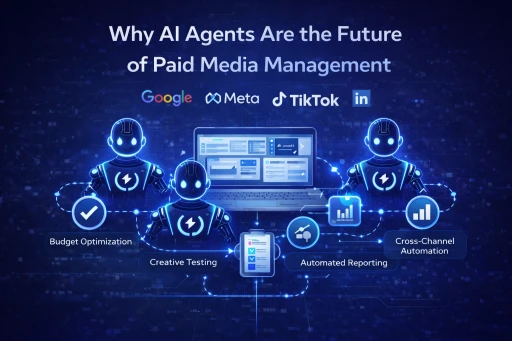
1. Real-Time Budget Optimization
AI agents watch your campaign data constantly. When one campaign is working great, the agent moves more money to it. When another is wasting spend, it pulls back — immediately.
This kind of real-time budget management used to take hours of manual work. Now it happens automatically, all day long.
Platforms like Scalable take this even further by coordinating AI agents across every channel at once. Instead of managing budgets one platform at a time, Scalable's agents look at the full picture and make smarter decisions across Google, Meta, and beyond — all in one place.
2. Creative Testing at Scale
One of the hardest parts of paid media is figuring out which ad creative works best. Normally, you'd have to set up tests, wait for data, check results, and then make changes. That whole cycle can take weeks.
AI agents can compress that timeline dramatically. They generate ad variations, launch tests, track results, and cut losing ads fast — leaving more budget for winners.
According to research from TikTok and NewtonX, marketers using automated campaign tools see 3x faster creative test velocity. That means you learn faster and waste less money.
3. Cross-Channel Campaign Management
AI agents can manage your ads across every platform at once. They compare how much value you're getting from Google vs. Meta vs. LinkedIn, and shift resources to where they'll do the most good.
This cross-channel view is something almost impossible for a human team to do well at scale. There are too many variables moving at the same time.
4. Competitor Research and Audience Insights
Before you even launch a campaign, AI agents can research what your competitors are doing — what ads they're running, what keywords they're targeting, and where they're spending. This helps you find gaps and opportunities faster.
Scalable's platform includes this kind of competitor intelligence built right into the workflow, so your campaigns start smarter from day one.
5. Automated Reporting with Real Insights
Nobody wants to spend hours building reports. AI agents can pull all your performance data together, spot patterns, and explain what's working — in plain language. Instead of staring at a spreadsheet, you get clear answers.
What Do the Numbers Say About AI Agents in Paid Media?
The evidence is strong and comes from primary sources:
Agentic AI can triple marketing ROI, campaign speed, and content output while freeing up 15–20% in costs (BCG, 2025)
Fortune 250 companies using agentic AI report campaign creation and execution speeding up 15x (McKinsey, November 2025)
Effective agentic AI deployments deliver 3–5% annual productivity improvements and can lift growth by 10% or more (McKinsey, 2025)
62% of organizations are now experimenting with AI agents, with 23% actively scaling them (McKinsey State of AI, 2025)
Campaign managers currently spend 26% of their time — over 10 hours per week — on manual optimizations that AI agents can automate (DoubleVerify Global Insights Report, 2025)
91% of marketers are using or plan to use third-party AI or automated bidding tools outside their DSPs (DoubleVerify, 2025)
Campaign activation using AI automation has seen a 32% year-over-year increase (DoubleVerify, 2025)
How Do AI Agents Differ From Platform Automation Like Google Smart Bidding or Meta Advantage+?
Platform-native tools like Google's Smart Bidding and Meta's Advantage+ are useful — but they only work within their own walls. They cannot see across your other channels, factor in your full business goals, or coordinate with other platforms.
AI agents are different because they:
Work across all channels at the same time — not just one platform
Understand your goals — not just platform-level metrics
Can plan multi-step strategies and adapt in real time
Coordinate with other agents (a creative agent talking to a budget agent, for example)
How Do AI Agents Handle Creative Fatigue on Meta and TikTok?
Creative fatigue is one of the biggest silent budget killers in paid media. It happens when your audience sees the same ad too many times — CTR falls, CPM rises, and ROAS quietly bleeds out.
The numbers make it clear:
Top-performing ads lose 38% of their effectiveness after just 5 weeks without a refresh (AdBid, 2026)
Creative fatigue causes CTR drops of 10–15% week-over-week once it sets in (AdBid, 2026)
On Meta, ads peak in performance between days 7–21, with fatigue typically setting in by week 3–4 — frequency above 3.0 is the danger zone (AdBid, 2026)
On TikTok, the average high-performing creative lasts just 7–10 days before performance degrades — brands spending over $10k/month need 3–5 new creative concepts per week to maintain scale (Koro TikTok Ad Benchmarks, 2025)
Once TikTok ad frequency exceeds 2.5x, conversion rates typically drop by 30–40% (Koro, 2025)
Here is how AI agents fix this automatically:
Detect fatigue early — by tracking CTR decay, rising frequency, climbing CPM, and falling engagement before performance tanks
Generate fresh creative variations automatically — so there is always a new hook, visual, or format ready to test
Rotate creatives on a data-driven schedule — based on real performance signals, not a manual calendar
Carry winning elements forward — identifying the angle, hook, or visual style that worked and building the next batch around it
The result is a self-refreshing creative system that stays ahead of fatigue instead of reacting to it. Scalable builds this into the entire campaign workflow — so creative refresh happens automatically, in the background, across every channel.
Will AI Agents Replace My Marketing Team?
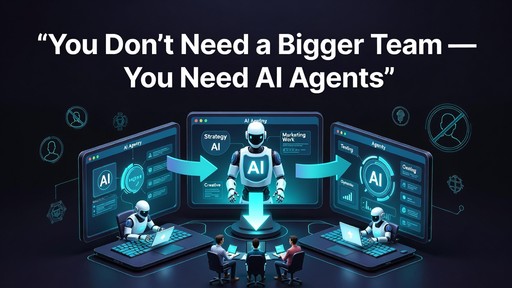
No. AI agents do not replace your marketing team. They make your team better.
Here is how the job changes:
Less time on: manual bid changes, pulling reports, setting up A/B tests, fixing budget pacing issues
More time on: strategy, brand direction, creative concepts, audience thinking, and big-picture decisions
McKinsey found that roughly 75% of CMOs are already investing in AI upskilling across their teams — and that the marketer's role is shifting from specialist to orchestrator of intelligent agents across the full campaign cycle (McKinsey, 2025). AI handles the execution. Your team provides the strategy, creativity, and judgment that agents cannot replicate.
How Do You Get Started With AI Agents in Paid Media?
You do not have to transform everything at once. The smartest teams start small and expand.
Phase 1 — Weeks 1–2: Pick your highest-spend channel. Set clear goals (ROAS target, CPA limit). Deploy AI agents to handle budget pacing and bid optimization. Validate your conversion tracking first so the agents have clean data to work with
Phase 2 — Month 2: Add creative testing automation. Let AI agents generate ad variations and run structured experiments on Meta and TikTok. Set up creative fatigue monitoring so underperformers are retired automatically
Phase 3 — Month 3+: Expand to full cross-channel coordination. Let AI agents manage the whole workflow — from competitor research and creative generation to real-time budget decisions and
Scalable is built for exactly rollout. You get full AI-powered campaign management — from the first research step all the way to real-time reporting — without having to stitch together ten different tools.
Frequently Asked Questions
What is an AI agent in paid media?
An AI agent is a smart program that can plan, make decisions, and take actions on its own. In paid media, it can manage your budgets, test creative, shift spend across channels, and report on results — all automatically.
Are AI agents the same as automated bidding on Google or Meta?
No. Platform bidding tools only optimize within one platform. AI agents work across all your channels, coordinate decisions together, and adapt based on your full business goals — not just one platform's metrics.
Will AI agents replace my marketing team?
No. AI agents handle the repetitive, data-heavy execution work. Your team focuses on strategy, creative direction, and big-picture thinking. Most teams find they can do more — and do it better — with AI agents handling the operational load.
How fast do AI agents improve campaign performance?
Many teams see meaningful improvements within the first 30–60 days. Budget pacing and bid optimization show results quickly. Creative testing and cross-channel gains compound over time as the agents learn your account patterns.
Is AI-powered paid media only for big brands?
Not at all. AI agents are especially valuable for smaller teams who don't have the bandwidth to manage complex campaigns manually. Platforms like Scalable are designed to give growing brands the same power that large enterprise teams have — without the headcount.
What makes Scalable different from other AI ad tools?
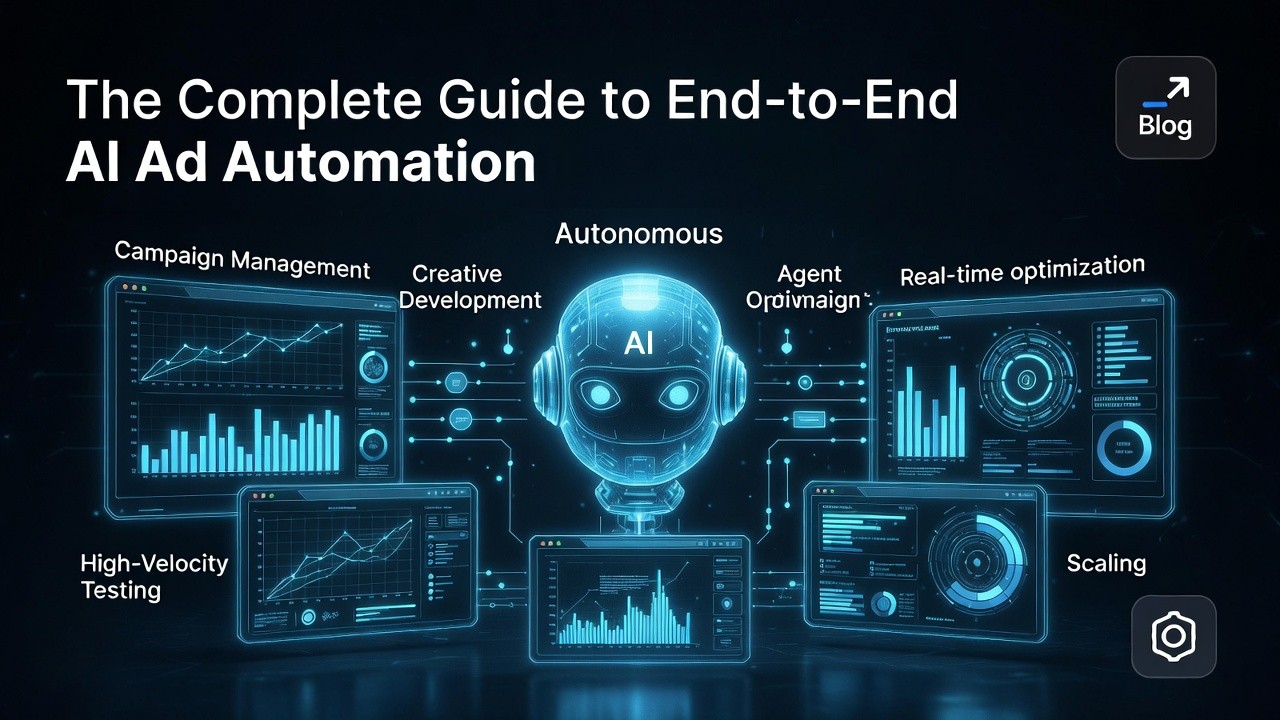
Scalable uses coordinated AI agents that handle the full advertising workflow — from competitor research and creative generation to structured experimentation, real-time budget optimization, and actionable reporting. It's not just one feature. It's the entire workflow, automated and working together.
We help to grow fast, so get started
shaan@kouo.io