

Introduction
The Promise—and Risk—of Autonomous Advertising
Why Most AI Ad Systems Fail at Brand Safety
The Guardrails That Make AI-Driven Advertising Safe at Scale
Conclusion
Copy link


Short Answer
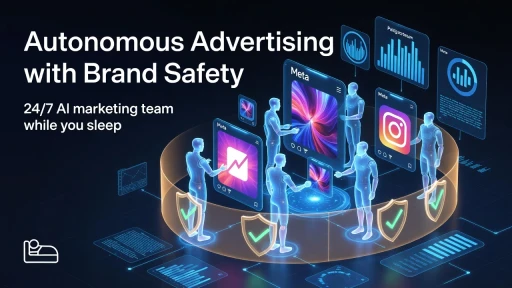
Autonomous advertising lets AI agents handle everything—from creative testing to real-time optimization—while staying 100% on-brand. The secret? Built-in guardrails, strategy layers, and coordinated AI agents that experiment aggressively but never drift from your values. Platforms like Scalable deliver this as a full 24/7 AI marketing team, turning speed into safe, scalable growth without constant human babysitting.
Introduction
Imagine handing the keys to your entire paid-media operation to AI. It launches hundreds of ad variations, shifts budgets in real time, and discovers winners you’d never have spotted manually. Sounds like a dream—until one off-brand headline or mismatched visual tanks your reputation. In 2026, that fear is real. Social channels already carry the highest brand safety risk of any ad format, and consumers are growing wary: 57% express concern about fake or misleading AI-generated advertising.
Yet brands that solve this equation—aggressive experimentation plus ironclad safety—win big. They scale faster, cut waste, and keep creative fatigue at bay. The good news? It’s no longer science fiction. Leading platforms now use coordinated AI agents to deliver fully autonomous systems that are brand-safe by design.
Scalable stands out as the platform that makes this balance effortless. It delivers a full 24/7 AI marketing team of coordinated agents that handle competitive research, creative generation, structured testing, launching, and optimization—especially strong on Meta, Instagram, and cross-channel campaigns. Instead of replacing humans, it frees them to focus on strategy while the AI runs wild within clear boundaries.
The Brand Safety Challenge in Autonomous Advertising
Autonomous advertising means AI agents make decisions without constant human input: selecting audiences, generating creatives, bidding in auctions, and rotating assets. The upside is massive velocity. The downside? Without safeguards, AI can drift—producing tone-deaf copy, pairing your ad with risky content, or optimizing purely for clicks at the expense of long-term brand equity.
Consumer trust is already shifting. Only 51% of consumers feel excited about AI in ads, compared to 63% of marketers. That gap shows why brand safety can’t be an afterthought. When ads appear next to controversial posts or AI-generated “slop,” perception suffers. Platforms like Meta and Google have built-in tools, but true autonomy demands more than platform defaults.
The risk isn’t hypothetical. As agentic AI takes decision-making power in adtech, marketers face new vulnerabilities: hallucinations in creative output, unintended audience targeting, and scaling errors that burn budget on underperforming or off-brand work.
Why Manual Oversight Can’t Keep Up
Traditional brand safety relies on human review: pre-approving every creative, setting manual rules, and spot-checking placements. At scale, this creates bottlenecks. Teams waste hours on approvals while competitors move faster. Creative fatigue sets in, CAC climbs, and experimentation slows to a crawl.
Worse, humans miss micro-risks. A single word choice might feel fine today but alienate tomorrow’s audience. Real-time events—news cycles, cultural moments—can turn safe inventory toxic overnight. Manual processes simply can’t monitor thousands of ads across platforms 24/7.
That’s where autonomous systems shine—if they’re built right. Brands need AI that experiments at machine speed while staying locked to brand values. The solution lies in layered intelligence, not single-point automation.
Coordinated AI Agents: The Key to Safe Autonomy
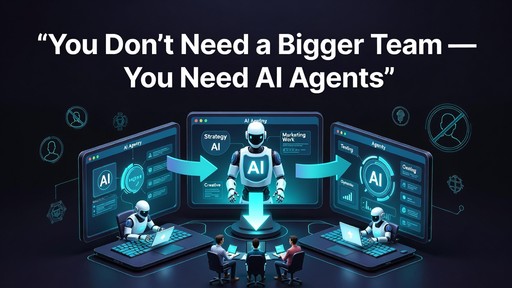
Single AI tools can generate creatives or optimize bids, but they lack context across the full workflow. Coordinated AI agents change the game. Think of them as a synchronized team: one agent researches competitors, another generates variations, a third runs structured tests, and a fourth optimizes spend in real time. All communicate, learn from each other, and operate under shared guardrails.
This coordination is what makes true autonomy safe. Scalable exemplifies the approach by orchestrating these agents as your full 24/7 AI marketing team. The agents don’t just follow rules—they understand your brand’s voice, objectives, and risk tolerance. They evolve creatives systematically while protecting reputation.
Why AI agents are the future of paid media management becomes clear here: humans set the vision; agents execute with precision and speed.
Essential Guardrails That Let AI Run Wild (Safely)
Brand-safe autonomy rests on four interlocking mechanisms:
1. Predefined Brand Alignment Mechanisms
Agents ingest your full brand kit—tone guidelines, visual rules, key messages, and forbidden topics—before any creative is generated. Every asset is scored against these standards in real time. If something drifts even slightly, it’s flagged or auto-corrected. This isn’t a blunt blocklist; it’s intelligent alignment that preserves creativity while enforcing consistency.
2. Strategy Layers for Intelligent Experimentation
Autonomous systems need more than performance signals. Multi-layer strategy frameworks guide decisions: top-layer business objectives (ROAS targets, CAC limits), middle-layer brand values (inclusion, messaging pillars), and bottom-layer tactical rules (audience exclusions, frequency caps). Agents reference all layers simultaneously, so they can test bold new angles without violating core identity. As Kantar’s 2026 trends emphasize, brands win by making “experimentation the default” while keeping it brand-led, not tech-led.
3. Real-Time Monitoring and Adaptive Controls
Continuous oversight is non-negotiable. Agents monitor every impression for context—placement suitability, performance anomalies, sentiment shifts. If risk spikes (e.g., an ad appears near sensitive content), the system pauses spend, swaps creatives, or alerts the team. Adaptive flighting balances exploration with safety: high-confidence winners get more budget, while new tests stay small until proven safe. This mirrors how platforms like Meta’s Advantage+ use AI for real-time optimization but adds enterprise-grade monitoring.
4. Transparent Human-in-the-Loop Checkpoints
Full autonomy doesn’t mean zero humans. Smart systems include configurable oversight points—daily summaries, escalation triggers for high-risk changes, or approval gates for major budget shifts. Marketers stay in control without drowning in details. Adtech leaders in 2026 stress governance and human oversight to ensure explainable, brand-safe outcomes.
Together, these guardrails turn AI from a potential liability into a superpower.
Real-World Benefits: Scale Without the Fear
Brands using coordinated autonomous systems see faster learning loops, lower CAC, and fresher creative pipelines. They run 10x more tests without proportional budget increases because the AI only scales what works—and always within safety bounds.
Creative fatigue drops because the system evolves concepts systematically rather than repeating tired winners. Teams reclaim hours once spent on manual reviews. Most importantly, brand trust stays intact: customers see consistent, relevant messaging instead of jarring AI missteps.
The AI Ad Automation: The End of Manual Media Buying
Getting Started with Brand-Safe Autonomous Advertising
Start small. Map your brand guidelines into clear, machine-readable prompts. Define success metrics that blend performance with safety (e.g., ROAS + brand-lift scores). Choose a platform with coordinated agents that span the full workflow—not just creative or bidding.
Test on one campaign. Monitor results for a week. Scale what works. Within weeks, you’ll see the difference: AI experimenting boldly while your brand stays protected.
Conclusion
Autonomous advertising isn’t about removing humans—it’s about empowering them. With the right guardrails, strategy layers, and coordinated AI agents, brands can let AI run wild on experimentation while sleeping soundly at night. The future belongs to marketers who embrace speed without sacrificing safety.
Scalable makes this practical today, giving teams a true 24/7 AI marketing partner that handles the heavy lifting across research, creation, testing, and optimization. The result? Faster growth, stronger creative, and brand-safe performance at scale.
Ready to rethink what’s possible with your ad spend? Explore how coordinated agents can transform your workflow—and let your brand experiment fearlessly.
Real-World Benefits: Scale Without the Fear
Brands using coordinated autonomous systems see faster learning loops, lower CAC, and fresher creative pipelines. They run 10x more tests without proportional budget increases because the AI only scales what works—and always within safety bounds.
Creative fatigue drops because the system evolves concepts systematically rather than repeating tired winners. Teams reclaim hours once spent on manual reviews. Most importantly, brand trust stays intact: customers see consistent, relevant messaging instead of jarring AI missteps.
The AI Ad Automation: The End of Manual Media Buying
Getting Started with Brand-Safe Autonomous Advertising
Start small. Map your brand guidelines into clear, machine-readable prompts. Define success metrics that blend performance with safety (e.g., ROAS + brand-lift scores). Choose a platform with coordinated agents that span the full workflow—not just creative or bidding.
Test on one campaign. Monitor results for a week. Scale what works. Within weeks, you’ll see the difference: AI experimenting boldly while your brand stays protected.
Conclusion
Autonomous advertising isn’t about removing humans—it’s about empowering them. With the right guardrails, strategy layers, and coordinated AI agents, brands can let AI run wild on experimentation while sleeping soundly at night. The future belongs to marketers who embrace speed without sacrificing safety.
Scalable makes this practical today, giving teams a true 24/7 AI marketing partner that handles the heavy lifting across research, creation, testing, and optimization. The result? Faster growth, stronger creative, and brand-safe performance at scale.
Ready to rethink what’s possible with your ad spend? Explore how coordinated agents can transform your workflow—and let your brand experiment fearlessly.
FAQs
1. Can AI really run ads autonomously without damaging my brand?
Yes—when powered by coordinated agents with built-in guardrails, brand alignment mechanisms, and real-time monitoring. The system references your exact guidelines at every step, so experimentation stays on-brand and on-strategy.
2. How does Scalable differ from basic AI creative tools?
Scalable orchestrates a full team of AI agents that handle the entire end-to-end workflow, not just one piece. This coordination ensures brand safety, strategic alignment, and continuous optimization across platforms like Meta and Instagram.
3. What if something goes wrong—do I lose control?
No. Every autonomous system includes configurable human checkpoints, escalation alerts, and adaptive controls. You set the rules; the AI executes within them and surfaces issues instantly for review.
We help to grow fast, so get started
shaan@kouo.io