

Introduction
Digital advertising professionals face a relentless grind of creative fatigue, manual A/B testing, and spreadsheet management that hinders scaling campaigns and burying promising ideas.
With markets evolving rapidly, manual processes fail to keep pace, limiting teams' ability to launch sufficient tests and focus on high-level strategy essential for growth.
This article reveals four surprising ways AI is transforming advertising through coordinated agent teams, intuitive vibe-based steering, creative amplification, and cost-effective scaling, enabling strategic partnerships over replacement.
Conclusion
Copy link


AI in Digital Advertising: Four Surprising Impacts on Strategy and Work
Quick Takeaways
The marketer’s role is evolving from operator to director. The future belongs to those who orchestrate intelligent systems, not those who babysit campaigns.
Solo marketers can now compete with full agencies. AI-powered platforms give individuals and lean teams the leverage of an entire agency without the overhead.
Creatives aren’t being replaced, they’re being unburdened. AI eliminates repetitive execution work so humans can focus on strategy, storytelling, and insight.
The Manual Grind of Modern Advertising
If you work in digital advertising, you know the grind. It's a relentless cycle of creative fatigue, manual A/B testing, and juggling spreadsheets. You're constantly trying to scale campaigns, but manual management is slow and simply can't keep pace with the market. Most teams struggle to launch enough tests to find what truly works, and good ideas often get buried before they have a chance to prove themselves. This constant ad "babysitting" leaves little room for the high-level strategy that actually drives growth.
Now, AI is delivering a new operating model that goes far beyond simple automation. This isn't just about making old workflows faster; it's a fundamental shift in how marketing teams operate. The true impact of AI in advertising is less about replacing humans and more about creating a new kind of partnership—one with some counter-intuitive truths. This article explores four surprising ways AI is changing the game, turning the manual grind into strategic execution.
Four Counter-Intuitive Truths About AI-Powered Advertising
1. Your Next Marketing Hire Isn’t a Person—It’s a Coordinated AI Team
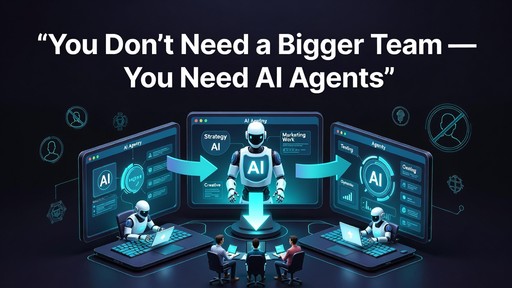
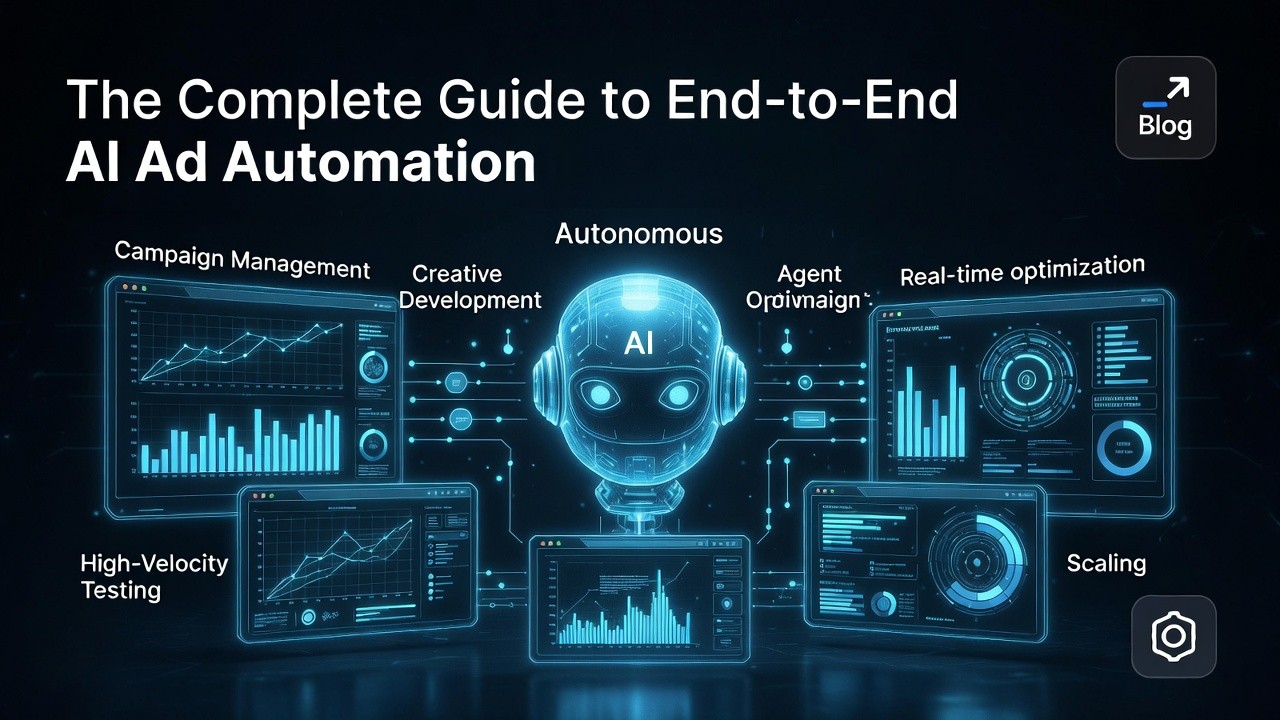
The first shift in thinking is to stop seeing AI as a single tool and start seeing it as a coordinated team. This new paradigm, known as Agentic Media Buying, replaces manual campaign sprints with an always-on squad of specialized "AI Agents" that collaborate 24/7 to manage the entire campaign lifecycle.
Scalable's virtual team consists of five distinct specialists, each handling a critical part of the marketing workflow:
Bran (The Strategist): Defines how your brand should sound while simultaneously scanning the market for emerging trends and competitive intelligence.
Desi (The Designer): Takes strategic themes and creates bold, on-brand visuals and creatives ready for high-volume testing.
Addie (The Performance Marketer): Structures and launches experiments, managing tests and optimizing bids across platforms like Meta, Google, and TikTok.
Anna (The Analyst): Surfaces causal insights—what actually moved the needle—so the entire system learns from what truly works, not just correlations.
Olly (The Engagement Manager): Orchestrates the entire process, collates tasks for your approval, and reports back on results, combining automation with human oversight.
This is a paradigm shift because it moves marketing away from fragmented tools and into a single, "closed-loop experimentation operating system." Instead of losing context between a strategist, a designer, and a buyer, these AI agents work in perfect sync. The system continuously learns and compounds gains over time, turning one person into a force multiplier and enabling the rise of "1 person unicorns" with the capability of a full-stack marketing team.
2. You Can Steer a Campaign with a "Vibe," Not Just Code
Traditionally, setting up an ad campaign is a technical, data-heavy process. A revolutionary approach called "Vibe Marketing" is changing that by prioritizing human intuition over technical expertise, making advanced AI radically more accessible.
This human-first approach is executed by the coordinated AI team. A user provides a plain-English "Vibe Brief" describing the brand's desired feel, tone, and goals. The system's "Vibe Compiler" then translates this qualitative "vibe" into a series of concrete, structured experiments complete with ad copy, creative variations, and audience segments for approval. Once you provide the Vibe Brief, Bran the strategist and Desi the designer translate it into testable hypotheses.
This is so counter-intuitive because it flips the typical human-machine interaction on its head. It connects the "vibe" to the deeper strategic outcome of aligning brand perception with what people are searching for in real time. This allows non-technical founders and marketers to steer sophisticated campaigns with brand vision, while the AI team handles the complex execution of keeping that vision relevant and optimized.
3. AI Doesn’t Replace Creatives; It Eliminates Their Most Repetitive Work
One of the most common fears surrounding AI is that it will make creative and strategic marketing roles obsolete. The reality, however, is that the true purpose of these platforms is to automate the "repetitive, low-joy parts of paid media." AI acts as an execution multiplier, amplifying what a human team can do by eliminating their most tedious production burdens.
This means handing off tasks like manual A/B test deployments, spreadsheet wrangling, and repetitive reporting to the AI agents. As Scalable's own philosophy states, the objective is not replacement but amplification:
“Scalable does not replace creatives. It eliminates the repetitive production burden, so creative teams can focus on high-level ideas and client strategy.”
By acting as a force multiplier, AI frees up human marketers to operate at a higher level. Instead of getting bogged down in execution, teams can dedicate their time to high-level strategy, nuanced creative direction, and understanding the deeper psychology of their audience. The machine handles the "what" and "how," allowing humans to focus on the "why."
4. One Person Can Wield the Power of an Agency
Hiring a full-stack marketing team—a strategist, designer, media buyer, and analyst—can easily exceed $19,400 per month before factoring in ad spend. AI-powered platforms deliver the capabilities of this entire squad for a software fee that is a tiny fraction of that cost, enabling the rise of "1 person unicorns."
This isn't just a theoretical cost-saving; it delivers tangible results. One B2C skincare brand used this approach to run over 400 ad variants in just 30 days, leading to a 47% decrease in their cost-per-acquisition (CPA). This mirrors results seen with B2B clients, where one SaaS company used the platform to generate 2.6x more demos by rapidly testing messaging.
This model fundamentally democratizes high-level advertising. It gives solo founders, lean startups, and small agencies the firepower to compete with large incumbents without needing massive payrolls. By providing access to enterprise-grade experimentation and optimization, AI levels the playing field and makes scalable growth accessible to everyone.
The Future of Your Focus
The true promise of AI in advertising is not about making old workflows faster but fundamentally changing the marketer's role from a "doer" of repetitive tasks to a "director" of an intelligent system. The focus shifts from campaign management to strategic orchestration.
By automating the endless cycle of testing, analyzing, and optimizing, these AI platforms handle the heavy lifting of execution. This empowers marketers to move from the weeds of campaign management to focus on the bigger picture: brand, strategy, and growth.
If a coordinated AI team could guarantee your experimentation flywheel was always spinning, what defining market would you have the confidence to win?
FAQs
What is AI-powered digital advertising? AI-powered digital advertising uses machine learning systems and coordinated AI agents to plan, create, test, optimize, and analyze ad campaigns continuously. Instead of relying on manual A/B testing and static rules, AI systems run ongoing experimentation, adapt to performance signals in real time, and compound learnings across campaigns.
Will AI replace digital marketers and creatives? No. AI does not replace marketers or creatives—it replaces repetitive execution work. Tasks like manual test setup, bid adjustments, reporting, and creative versioning are automated so humans can focus on strategy, brand direction, messaging, and audience insight. The marketer’s role shifts from “operator” to “director.”
What does “Vibe Marketing” mean? Vibe Marketing is a human-first approach where campaigns are guided by plain-English creative direction instead of technical setup. Marketers provide a “vibe brief” describing tone, goals, and brand feel. AI then translates that qualitative input into structured experiments, ad creatives, and audience strategies—making advanced advertising accessible to non-technical users.
We help to grow fast, so get started
shaan@kouo.io