


Introduction
Quick Answer
The Golden Age of the Creative Marketer
The Solo-Enterprise Is Already Here
Conclusion
Copy link


Quick Answer: How AI Is Empowering Marketers
In 2026, the distance between a strong marketing idea and a live, optimized campaign has effectively collapsed. A single marketer can now operate at the level of a full agency by delegating execution to autonomous AI agents.
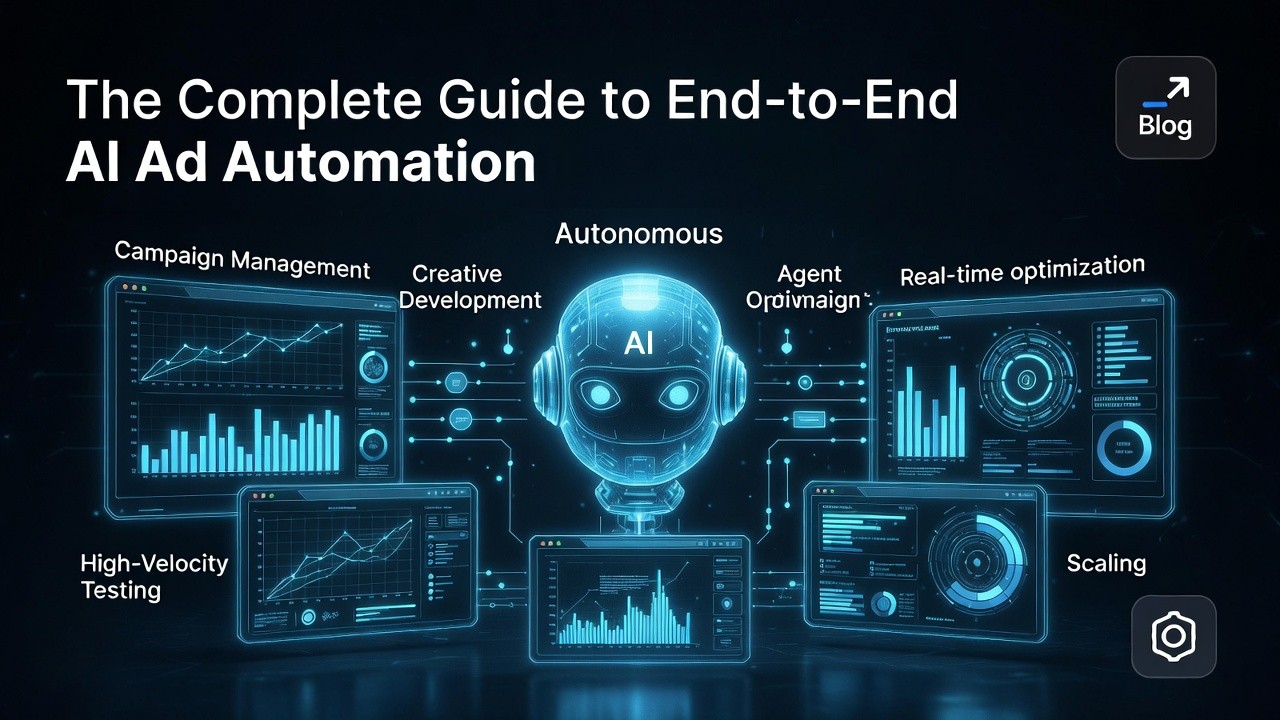
Platforms like Scalable enable this shift by running the full advertising workflow—research, creative production, campaign launch, optimization, and learning—continuously and in parallel. This has given rise to the “Solo-Enterprise”: an individual marketer with the leverage, output, and consistency once reserved for large teams.
Instead of managing tools and processes, marketers can focus on strategy, creative direction, and brand judgment—the parts of marketing that still require human taste.
The Golden Age of the Creative Marketer
For decades, marketing was constrained by execution.
A good idea had to pass through design queues, campaign setup, budget controls, and reporting cycles before it ever reached an audience. Creativity was abundant, but bandwidth was scarce.
By 2026, that bottleneck is gone.
Agentic AI platforms now handle execution as a continuous background process. Campaigns don’t wait for weekly optimizations or manual adjustments. Creative testing, performance analysis, and budget reallocation happen automatically, all the time.
This shift hasn’t eliminated the marketer. It has promoted them—from operator to decision-maker.
1. Your Idea Is the Starting Point, Not the Constraint
Historically, many campaign ideas were abandoned not because they were weak, but because they were expensive or time-consuming to execute.
With Scalable, execution capacity is no longer the limiting factor.
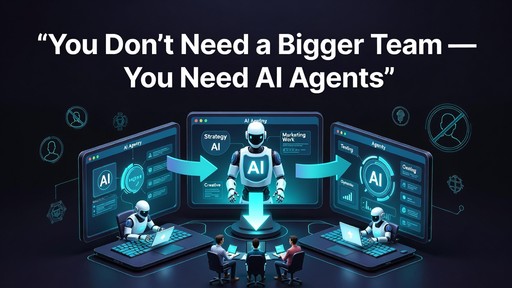
The platform’s multi-agent system acts as a persistent execution layer:
One agent researches competitors and market signals
Another produces on-brand creative variations
Another launches and structures campaigns
Another analyzes performance and reallocates spend
Example
The idea: a cyberpunk-inspired sneaker launch
The execution: the system generates creative variations, builds campaigns, launches tests, and learns from results automatically
What changes:
Ideas don’t need to be “worth the effort” upfront. They can be tested quickly, safely, and at scale. Marketing becomes iterative again—driven by learning rather than fear of wasted work.
2. Strategy In, Execution Out
One of the most meaningful shifts in 2026 is the separation of strategy from mechanics.
Traditional ad platforms required marketers to translate intent into technical configurations—audiences, bids, exclusions, and placements. This translation layer introduced friction and error.
Scalable removes that burden.
Marketers provide direction:
Goals
Creative intent
Budget priorities
The system handles execution:
Structuring campaigns
Testing creative
Optimizing spend
Learning from outcomes
Instead of managing settings, marketers review results and guide next steps. This makes high-performance advertising accessible to founders, creatives, and small teams without requiring deep platform-specific expertise.
3. From Campaign Manager to System Director
The marketer’s role has shifted from managing individual campaigns to directing an adaptive system.
In the past, optimization meant reacting to dashboards. In 2026, optimization is continuous and automated. The human role is to:
Set direction
Interpret insights
Decide where to push or pull
Scalable’s agents handle the day-to-day execution reliably, allowing marketers to operate at a higher level. This is how a team of one or two can compete with organizations hundreds of times their size—not by working longer hours, but by directing intelligence instead of labor.
4. Continuous Learning, Not Reactive Optimization
Modern advertising no longer rewards slow iteration.
Scalable is designed around constant experimentation and learning:
Creative variations are always being tested
Performance data feeds directly back into future decisions
Spend shifts automatically toward what’s working
This means campaigns don’t wait for manual reviews to improve. The system adapts as conditions change, helping brands stay efficient and relevant without constant oversight.
For marketers, this creates confidence: every campaign contributes knowledge, not just spend.
Conclusion: The Solo-Enterprise Is Already Here
The End of Friction Between Ideas and Impact
This shift isn’t about replacing marketers with automation. It’s about removing the friction that has always separated strong ideas from real-world impact.
For years, marketing success depended as much on operational capacity as on creativity. The best ideas didn’t always win—the best-resourced teams did. Agentic AI platforms like Scalable change that equation by taking ownership of execution, experimentation, and optimization as a continuous system.
What remains human becomes more important, not less. Taste. Strategy. Narrative. The ability to decide what should exist in the world and why it matters. Execution becomes reliable and always-on, handled in the background, while creative direction and judgment move to the foreground.
Leverage Is the New Baseline
In 2026, the most effective marketing organizations aren’t defined by headcount—they’re defined by leverage.
Teams win by learning faster, adapting continuously, and wasting less effort translating intent into action. Agentic systems compound advantage by ensuring every campaign contributes insight, not just spend.
The Solo-Enterprise isn’t a speculative future or an edge case reserved for early adopters. It’s the new baseline for how modern marketing operates. Those who embrace it gain speed and clarity. Those who don’t will find themselves limited not by ideas, but by how slowly they can act on them.
Marketing hasn’t become less human.
It’s finally become human again—at scale.
Frequently Asked Questions
What is a “Solo-Enterprise” in marketing?
A Solo-Enterprise is a marketing model where a single marketer operates with the execution power of a full agency by delegating research, creative production, campaign launch, and optimization to AI agents. In 2026, agentic AI platforms like Scalable make this possible by running the full advertising workflow autonomously while the marketer provides strategic direction.
How are AI agents different from traditional ad automation tools?
Traditional ad automation tools rely on predefined rules and manual oversight. AI agents, by contrast, operate autonomously across the entire campaign lifecycle. They research opportunities, generate creative variations, launch structured experiments, optimize spend based on performance, and continuously learn from results—without requiring step-by-step human input.
Does agentic AI replace marketers?
No. Agentic AI replaces manual execution, not human judgment. In 2026, marketers using agentic platforms spend less time managing campaigns and more time shaping strategy, creative direction, and brand positioning. The human role shifts from operator to decision-maker, while AI handles execution continuously in the background.
We help to grow fast, so get started
shaan@kouo.io