

Introduction
In performance marketing, ads that initially perform well often suddenly stall, with ROAS dropping and engagement fading as the audience becomes overexposed to the same creative.
Ad platforms now demand high volumes of creative variations and faster refresh cycles, making manual processes insufficient and leading to wasted budgets on stale ads while missing new opportunities.
This article provides a technical definition of creative fatigue, diagnostic signals to identify it in campaigns, and a playbook for recovery through automated, continuous experimentation.
Conclusion
Copy link


Understanding Creative Fatigue: Definition, Signals & a Recovery Playbook
Quick Takeaways
What Creative Fatigue Is: It’s the measurable decline in ad performance, like a dropping Return on Ad Spend (ROAS), that happens when you aren't constantly testing fresh creatives to keep your campaigns effective.
Why It Happens: Modern ad platforms demand a high volume of creative variations and faster refresh cycles than most teams can manage manually. This gap leads to stale ads and missed opportunities.
How to Fix It: The solution is to replace slow, manual testing sprints with a continuous, automated experimentation loop. This system tests hundreds of ad variants to discover what works, ensuring you always have high-performing creative ready to deploy.
TL;DR:
Creative fatigue is when your ad performance drops because your audience is tired of the same ads, and the only cure is a system that continuously tests fresh ideas.
Introduction
It’s one of the most familiar stories in performance marketing. You launch an ad, and it’s a clear winner. The numbers look great, conversions are rolling in, and everything is humming along. Then, without warning, it stops working. The ROAS drops, engagement fades, and you’re left scrambling to figure out what went wrong.
The culprit is almost always creative fatigue. It’s not just a vague marketing concept; it’s a real, data-driven signal that your audience has seen your ad too many times and it’s no longer effective. A problem that feels inevitable.
This post will give you a technical definition of creative fatigue, show you the clear signals to diagnose it in your own campaigns, and provide a practical playbook for recovery. It's not about working harder—it's about building a smarter system for growth.
Why Creative Fatigue Matters Right Now
The stakes in digital advertising are higher than ever, and the cost of being slow is steep. Wasting budget on underperforming ads is bad enough, but the bigger loss comes from burying good ideas before they get a real chance to prove themselves.
Today's ad platforms, from Meta to TikTok, expect a constant stream of creative variations and faster refresh cycles. The most effective systems can run 100–500+ ad variants with AI in the time it takes to brief an agency. The algorithms thrive on data, and the more creative you test, the better they can optimize your results.
The old model of manual sprints and weekly optimizations is broken. It forces you to burn budget on stale winners while missing out on fast-moving opportunities. To stay competitive, you need to shift from a reactive approach to a proactive, always-on system of experimentation—what we call agentic media buying.
How Creative Fatigue Works: Definition and Diagnosis
A Technical Definition
Creative fatigue isn't a vague marketing concept—it's a measurable data signal. The source calls this ad performance fatigue, and its technical definition is simple: if you’re not constantly testing fresh creatives, your ROAS is dropping. Your audience has become overexposed to the same message, and it has lost its impact.
The Diagnostic Signals
Recognizing the problem is the first step to fixing it. Here are the key signals that creative fatigue is impacting your campaigns:
Dropping ROAS: This is the clearest sign. Your once-reliable, high-performing ads are suddenly underperforming, and your return on ad spend is in decline.
Performance Plateaus: Your campaigns feel stuck. Despite your best efforts, you can't seem to improve key metrics, and growth has stalled. The system needs new inputs to break through the plateau.
Slow, Manual Testing: Your team struggles to produce and test enough new ad variations to find the next winner. This leads to stagnation, as you’re forced to rely on aging creative long past its expiration date.
"Babysitting Ads": You and your team spend too much time on the repetitive, low-joy parts of paid media—manually adjusting bids, swapping out images, and wrestling with spreadsheets—instead of focusing on high-level strategy.
The Bigger Picture: The Recovery Playbook
Overcoming creative fatigue isn't about more frantic, manual work. It's about a strategic shift—moving from guesswork and repetitive tasks to the Scalable methodology, a systematic, automated playbook for continuous learning and improvement.
Step 1: Stop Guessing, Start Testing
Your best ad isn't a guess—it's discovered through testing. This process starts with strategy, not luck. Our AI Strategist, Bran, analyzes your market and competitors to generate data-backed hypotheses, removing guesswork from the very beginning. The only way to know what will resonate is to run real-world experiments and let data drive your decisions.
Step 2: Automate the Repetitive Work
Automation is the engine of modern creative testing. Our AI agents act as a force multiplier, handling the heavy lifting so your team can focus on what humans do best. Desi, our AI Designer, crafts hundreds of on-brand creative variations, while Addie, our AI Buyer, handles the tedious campaign setup and launch logistics. This isn't about replacing people; it's about amplifying their expertise.
Step 3: Shift to a Continuous Learning Loop
Replace fragmented manual sprints with a single, cohesive learning loop. In this model, every experiment feeds the next. Ana, our AI Analyst, reviews performance in real-time, feeding insights back to Bran to create a compounding learning loop that gets smarter with every test, constantly refining creative direction, messaging, and targeting.
Step 4: Deploy Your AI-Powered Team
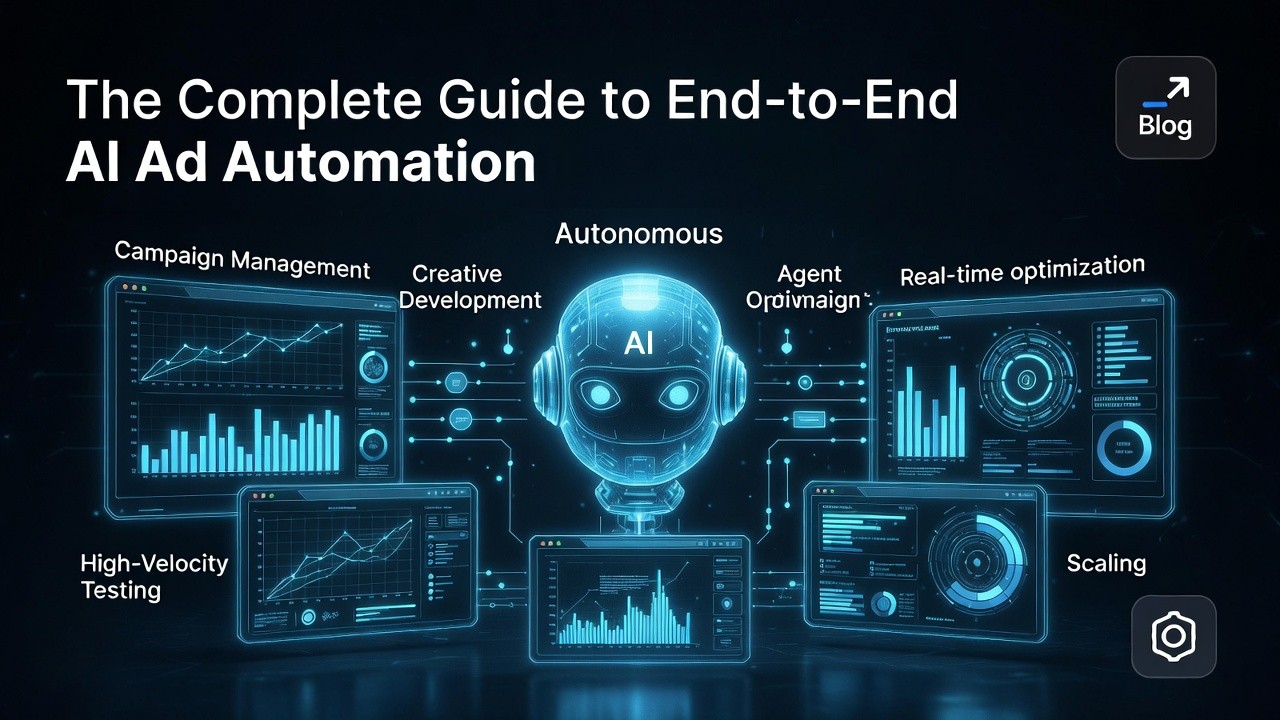
The final step is to embrace a new model: agentic media buying. This means deploying a full-stack AI marketing team that works 24/7. Your five agents—Bran (Strategist), Desi (Designer), Addie (Buyer), Ana (Analyst), and Olly (Ops Manager)—collaborate as a cohesive unit to manage the entire workflow. This human-first approach, what we call vibe marketing, guides the AI agents, giving one person the capability of a full team.
Final Thoughts
Creative fatigue is a universal challenge in modern advertising, but it's not an unsolvable one. The answer isn't to work longer hours or demand more from already stretched teams. It's about working smarter by embracing a system that automates the execution so you can focus on strategy.
By shifting from manual guesswork to an automated, continuous learning loop, you build a powerful engine for growth. This approach leads to faster learning, better performance, and a more strategic role for marketers. By building this automated engine, you're not just fighting fatigue; you're building a system for predictable, scalable growth.
Frequently Asked Questions
Question: What is the number one sign of creative fatigue? Answer: The clearest sign is when a previously high-performing ad starts to see a drop in its Return on Ad Spend (ROAS). This indicates the creative has become stale and is no longer resonating with your audience.
Question: How does automated testing help prevent creative fatigue? Answer: Automated, AI-powered platforms can test hundreds of creative variations in the time it takes a human team to test a few. This high-volume testing ensures you always have fresh, high-performing ads ready to prevent performance drops and keep campaigns optimized.
Question: Does fighting creative fatigue mean replacing my team with AI? Answer: No, it automates the repetitive execution work so your team can focus on what they do best: strategy, brand, and messaging. It acts as a force multiplier, giving a small team the power of a much larger one.


We help to grow fast, so get started
shaan@kouo.io