

Introduction
Lean media teams often struggle with limited bandwidth to manage the full ad lifecycle from ideation to optimization across multiple channels.
In a market that rewards speed and scale, fragmented tools create silos and latency, making it hard to prove impact quickly without adding headcount.
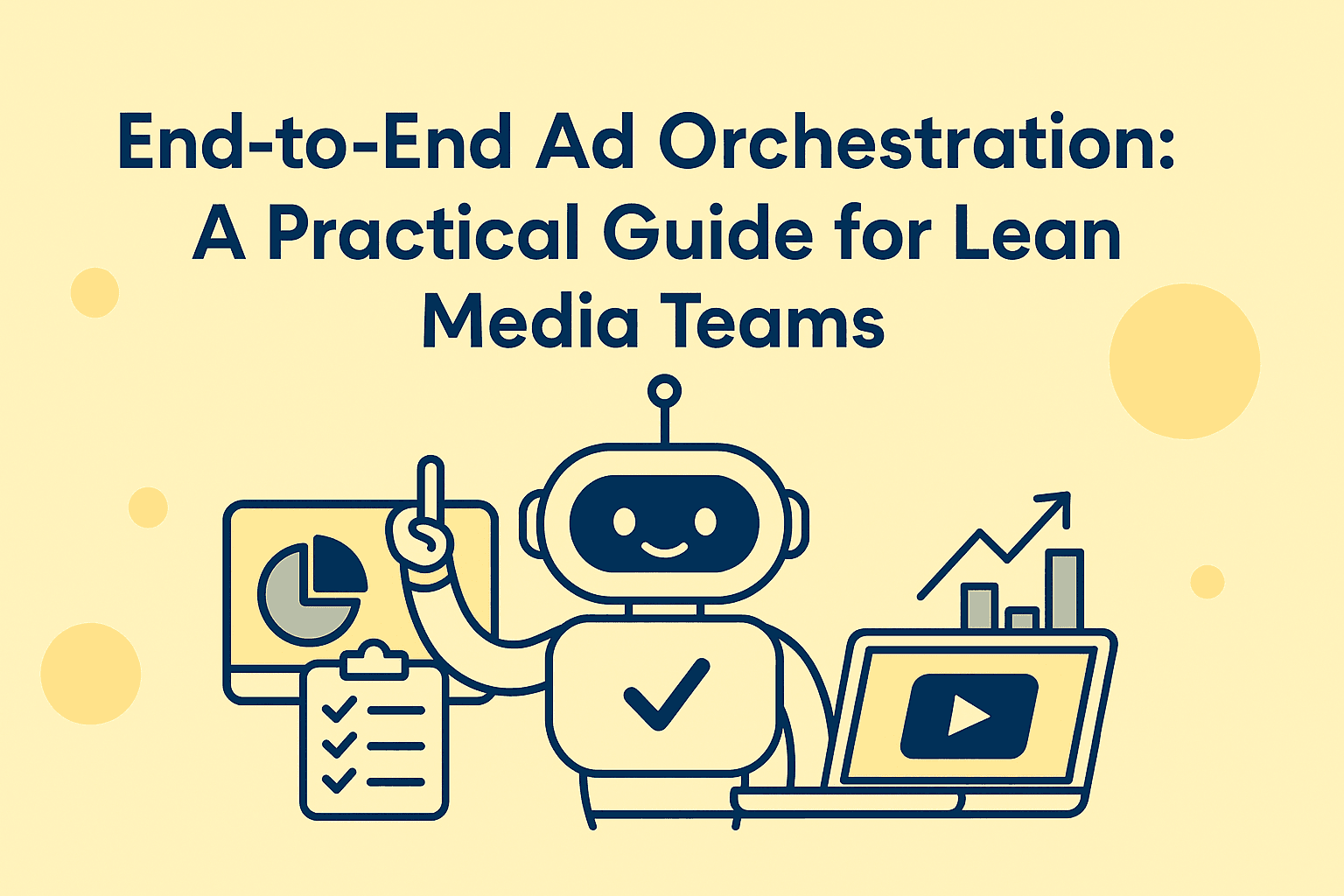
This guide provides a clear definition of end-to-end ad orchestration, core principles for success, a step-by-step blueprint, and proof points showing how Scalable enables lean teams to scale campaigns effectively.
Conclusion
Copy link


Quick Takeaways
End-to-end ad orchestration unifies the full lifecycle from ideation and creation to publishing, measurement and ongoing optimization across multiple channels in one system.
Scalable runs five AI agents that continuously test, learn and reallocate budgets in real time while staying within ROAS/CPA guardrails.
Lean teams can scale testing and insights without adding bodies, delivering faster and smarter campaigns on predictable costs.
An end-to-end approach means you translate a brand brief into tests and budget moves that reflect intent, not just random optimization.
Introduction
Lean media teams move fast. They ship ideas, run experiments and try to prove impact with limited hours, limited budget and a lot riding on every decision. The catch is not ambition, it’s bandwidth. Scalable delivers a practical, end-to-end system that harmonizes research, creative, buying and analytics into one continuous loop. It’s built for teams who want to test more, guess less and scale with confidence.
In this guide, you’ll get a clear definition of end-to-end ad orchestration, why it matters now, the core principles that drive success, a practical, do-this-next blueprint and concrete proof points that show what’s possible when you put Scalable to work. Think of it as the lean marketer’s playbook for turning a brand brief into scalable growth without the payroll bloat.
What is End-to-End Ad Orchestration?
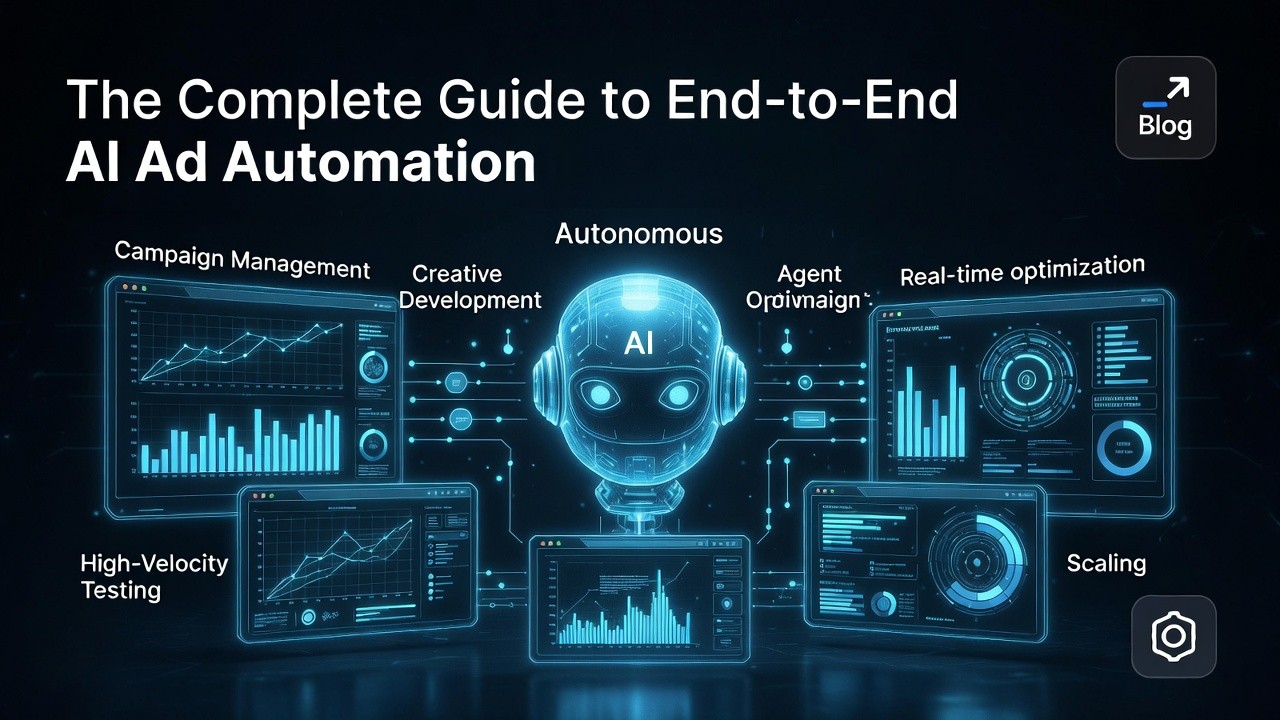
End-to-end ad orchestration is the practice of managing the entire ad lifecycle in one integrated platform: research, ideation, creative testing, production, publishing, cross-channel activation, measurement and ongoing optimization. It’s not a collection of disconnected tools, but a closed loop where every part of the system talks to every other part automatically.
Centralized workflow: Connect your ad accounts, creative assets and data sources so teams work from a single, aligned source of truth.
Cross-channel activation: A single orchestration layer runs tests and budget moves across channels without handoffs or re-exports.
Automation with guardrails: Five AI agents tirelessly test variants, analyze results in real time and reallocate spend to high performers, all within predefined ROAS/CPA boundaries.
Continuous learning: Insights pile up quickly as experiments run in parallel, shortening the path from hypothesis to action.
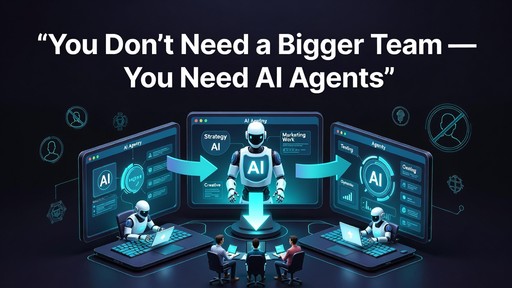
Five AI agents for the price of an intern, and an entire agency’s discipline for a solo operator. That combination is what makes end-to-end orchestration not just possible for lean teams, but profoundly game-changing.
Why End-to-End Ad Orchestration matters more than ever
The market rewards speed, scale and clarity. Fragmented tooling creates silos, adds latency and makes it hard to prove impact in weeks rather than months. When you orchestrate end-to-end, you unlock:
Faster learning cycles: Tests run in parallel, insights arrive in hours, not weeks.
Predictable costs: Automation drives scale without payroll surprises or boutique-agency overhead.
Real-time optimization: Resources shift to winning creatives and placements as soon as signals show performance gains.
In practice, lean teams can compete with bigger shops by turning a brand brief into a living, optimizing campaign system. Scalable’s end-to-end approach is purpose-built for this. Delivering structure, speed and measurable outcomes.
Core Principles of Successful End-to-End Ad Orchestration
Test more, guess less. Use automation to run a broader set of hypotheses without multiplying headcount.
End-to-end equals consistency. A single orchestration layer ensures brand intent stays intact as campaigns scale.
Data-informed decisions first. Let metrics steer the test landscape and budget moves, not intuition alone.
Lean-friendly, not lean-on-you. The goal is to liberate teams from grunt work, so they spend time on strategy and impact.
Continuous optimization, not one-and-done. The system should keep learning and improving even after launch.
Step-by-Step: How to Execute End-to-End Ad Orchestration Effectively
Step 1: Audit Your Current Process
Map the full lifecycle from research to reporting.
Identify bottlenecks through bandwidth constraints, long handoffs manual data wrangling.
Define a baseline of speed and cost you want to beat.
Step 2: Define Clear Goals
Translate brand intents into measurable outcomes, such as clicks, ROAS, CPA, enrollment or lead quality.
Set guardrails to prevent waste (e.g., ROAS floor, max CPA, budget caps per channel).
Decide how you’ll measure success in hours, days and weeks.
Step 3: Choose the Right Tools
Favor platforms that unify research, creative, buying and analytics in one workflow.
Ensure your tool supports cross-channel activation and real-time optimization.
Look for built-in automation with transparent outcomes and human-friendly controls.
Step 4: Build and Execute Your Strategy
Start with a core hypothesis: “If we test five new variants per asset, we’ll uncover a 20% uplift in acceptance at the same spend.”
Activate parallel tests across channels and formats with automated budget shifts to the best performers.
Maintain brand guardrails so the tests stay aligned with your vibe and messaging.
Step 5: Measure, Learn, Improve
Track the right signals: CTR, ROAS, CPC, time-to-insight and the efficiency of ad creation and reporting.
Use rapid feedback loops to refine assets, placements and bids.
Scale the winning patterns but preserve the core brand voice to maintain consistency.
Common Mistakes to Avoid when doing End-to-End Ad Orchestration
Siloed optimization: Trying to optimize channels in isolation rather than as part of a cohesive loop.
Over-automation without guardrails: Letting speed outrun quality and brand alignment.
Ignoring the brand brief: Letting vanity metrics drive testing instead of the brand’s intent.
Waiting for perfect data: Waiting too long to act; lean teams should act on imperfect signals and iterate.
Under-investing in measurement: If you can’t see the impact clearly, you won’t know where to invest next.
How Scalable Helps You Master End-to-End
End-to-end workflow across channels: Scalable unifies ideation, creative, activation and measurement into one seamless process.
Automation and real-time optimization: Five built-in AI agents test creatives, monitor performance and reallocate budget toward top performers, all while honoring guardrails.
Lean-team enablement: A single operator can outperform what used to require a full team by auto-generating variants, running live tests and letting budgets flow toward what works.
Lean-team scenarios: Perfect for founders, marketing ops pros and agencies who want measurable impact without heavy engineering or large headcounts.
Final Thoughts
End-to-end ad orchestration is a practical, repeatable system that scales your output, preserves brand integrity and gives lean teams the freedom to push for bigger outcomes without bigger teams. Scalable is delivering a disciplined engine; cross-channel, automated and relentlessly focused on outcomes. If you want faster tests, clearer insights and campaigns that feel less like work and more like progress, this is where you start.
Ready to Master End-to-End Ad Orchestration?
Start your free trial and run your first 10 tests this week.
Or book a consultation to tailor a plan for your brand and goals.
FAQs
Q. What is end-to-end ad orchestration?
It’s a single platform that manages the entire ad lifecycle—from research and ideation to creative testing, publishing, measurement, and ongoing optimization—across multiple channels.
Q. How does Scalable handle cross-channel activation?
It unifies your accounts into one workflow, so tests and budget moves apply consistently across social, search, display, and video, with performance signals feeding back in real time.
Q. How quickly can lean teams see results?
With parallel testing and real-time optimization, many teams move from hypothesis to action in hours and see meaningful lift within days, not weeks.
Q. What metrics improve with Scalable?
Core outcomes include CTR, ROAS, CPC, time-to-insight, speed of ad creation, and efficiency of reporting. You get faster learnings and faster scale without added personnel.
Q. How does pricing scale with automation?
The platform is designed to scale testing and optimization without proportional increases in payroll. Automation drives more tests per dollar, preserving cost predictability.
Q. How do I get started with Scalable?
Choose between a trial or a guided demo. Either will show how end-to-end orchestration can transform your lean team’s velocity and impact.
Ready to go from brief to live faster — and keep getting better with every campaign?
Learn more about End-to-End AI Ad Automation and Agentic Media Buying
Related Guides
Want to go deeper into end-to-end AI ad automation? Here are the most relevant guides from our library:
From Brief to Live Campaign: How to Automate Your Full Ad Workflow Learn the complete journey from campaign brief to fully live, self-optimizing ads using agentic AI.
End-to-End AI Ad Automation Platforms in 2026: What Actually Works Compare today’s platforms and understand why true end-to-end automation is still rare.
What End-to-End Ad Automation Actually Looks Like in Practice See real-world examples of autonomous campaign execution and the performance gains brands are achieving.
What Is Agentic Media Buying? A Clear Framework for 2026 Understand the difference between traditional AI tools and true proactive, agentic systems.
How Scalable’s AI Agents Work: Turning Micro-Behaviors into Macro Performance Gains Dive into the mechanics of autonomous AI agents and how they convert small signals into major results.
Can I Use AI for True End-to-End Ad Optimization? Get an honest assessment of current capabilities and what’s realistically achievable with AI today.
Automating Ad Experiments with AI Agents for 10x Faster Wins Discover how agentic experimentation dramatically increases testing velocity and campaign performance.
We help to grow fast, so get started
shaan@kouo.io