

Introduction
Marketers often spend excessive time on repetitive tasks like manually tweaking campaigns and managing spreadsheets, which hinders strategic thinking.
In today's fast-paced ad platforms, this slow manual process leads to wasted budgets, creative fatigue, and good ideas remaining untested as audience behaviors shift rapidly.
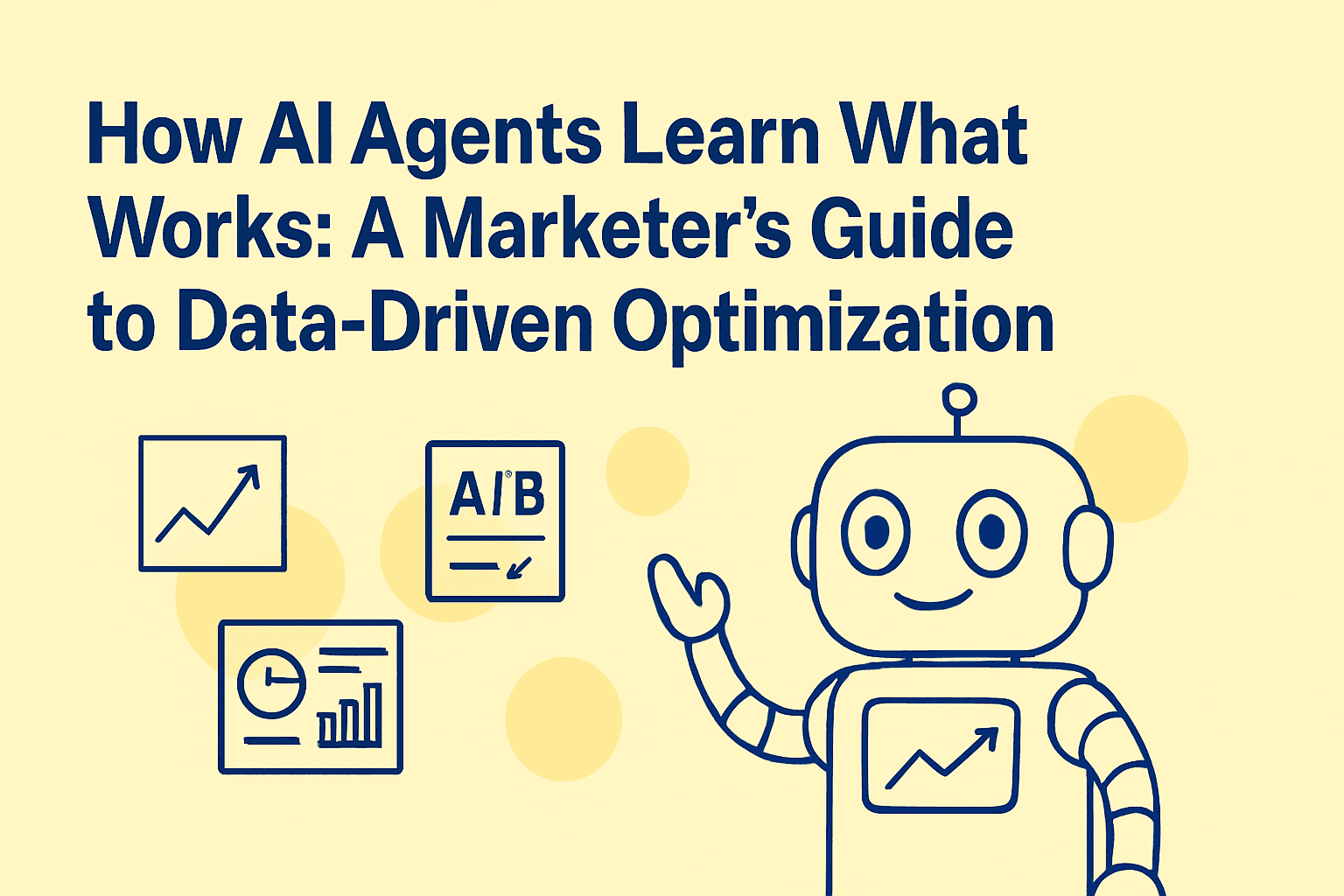
This guide explains how AI agents create a continuous feedback loop using live performance data to automate testing, optimize ads in real-time, and enable data-driven growth through vibe marketing.
Conclusion
Copy link


Quick Takeaways
AI-driven ad optimization is a system that uses live performance data to create a continuous feedback loop, turning insights from past ads into new, smarter experiments.
This process solves the frustrating problem of slow, manual testing, which often causes good creative ideas to get lost or die before they can be validated.
The outcome is that marketing teams get faster insights and predictable ways to scale what’s actually working, moving beyond guesswork and into structured, data-driven growth.
TL;DR: How It Works in One Sentence
AI agents learn what works by continuously turning live performance data into a cycle of new ad experiments, automatically shifting budget to the winners.
Introduction
If you’ve ever felt like you spend more time "babysitting ads" than thinking strategically, you’re not alone. The repetitive, low-joy work of manually tweaking campaigns, duplicating ad sets, and wrangling spreadsheets is a common frustration for marketers.
This manual process is simply too slow for today’s fast-moving ad platforms. Creative fatigue sets in quickly, audience behavior shifts overnight, and the cost of being slow is real, wasted budget. Good ideas get stuck in a backlog, waiting for a chance to be tested.
But there’s a better way. An automated system can handle the heavy lifting, running hundreds of tests and optimizing in real-time. This isn't about handing over control; it's about steering a powerful engine with simple, strategic direction—a concept known as 'vibe marketing,' where you guide the AI with plain-English goals and let it handle the complex execution. This frees you and your team to focus on what you do best: high-level strategy, creative direction, and building a brand your customers love.
The Why and How of AI Learning Loops
Why This Isn't Just Hype: The Real Cost of Guesswork
The shift to AI-driven optimization is happening because manual testing can no longer keep up. Ad platforms expect more creative variants and faster refresh cycles than most teams can possibly manage by hand.
The main problem this solves is that good ideas die before you can validate them. An interesting headline, a new visual angle, or a promising audience segment might sit untested for weeks. By the time you get to it, the opportunity may have passed.
An AI learning loop compresses the entire testing cycle, turning weeks of manual work into days of automated learning. It gives your team an engine for generating small, verifiable wins that compound over time, creating reliable and scalable growth.
How the AI Feedback Loop Actually Works
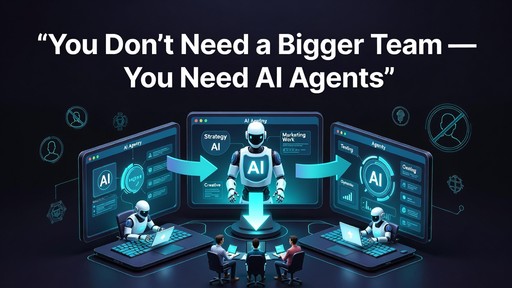
Instead of thinking about a single piece of software, imagine a compact team of specialized AI agents working together 24/7. This team runs a continuous learning cycle to discover what works and scale it automatically. Here’s how it breaks down:
It Starts by Listening. The process begins with Bran, the AI Strategist, pulling in signals from every direction. Bran scans your competitors' top-performing ads, analyzes your own historical performance data, and ingests your brand information. This initial research phase helps it understand the market, your voice, and what’s already resonating with your audience.
It Forms a Hypothesis. Based on Bran's research, the AI generates a list of testable hypotheses. It might identify untapped messaging angles your competitors are ignoring, creative formats they are using successfully, or new audience segments you haven't tried. For example, a hypothesis might be: "User-generated content will outperform polished brand visuals for this product."
It Runs Hundreds of Small Experiments. This is where Desi, the AI Designer, and Addie, the Performance Marketer, step in. Desi generates hundreds of ad variations—copy, visuals, hooks, and calls to action—while Addie structures and launches them as controlled tests. This isn't random guessing; it's high-volume, structured testing designed to isolate which variables are driving performance, with some brands testing over 400 variants in a single month to find what works.
It Measures, Learns, and Acts. This is the core of the feedback loop, led by Anna, the Growth Analyst. Anna monitors the performance of every ad variant in real-time. As soon as she identifies statistical winners, the system automatically reallocates the budget toward them. Just as importantly, it pauses the losers early, protecting your ad spend from being wasted on concepts that aren’t working.
It Repeats. Forever. This isn't a one-time campaign. The results and learnings from each test become the inputs for the next round of hypotheses. This creates a compounding effect where the system gets smarter and more effective over time, continuously discovering new ways to drive growth.
The Big Picture and Final Thoughts
Clearing Up Some Common Misunderstandings
So, does this replace my media buyer?
No, it acts as a force multiplier, not a replacement. The system automates the repetitive, mechanical work of launching tests and shifting budgets. This frees up your human team to focus on high-level strategy, creative direction, and interpreting nuanced insights—the work that truly drives long-term brand growth.
Is this just another AI ad writer?
Writing ads is only a small piece of the puzzle. The core value is the entire automated experiment loop: from generating a hypothesis to launching a structured test, measuring the results, and automatically scaling the winners. It's an end-to-end system for learning, not just a content generator.
Is it just 'plug and play'?
While it's designed to be easy to set up, the AI needs quality inputs to work effectively. It requires clear objectives (like a target CPA or ROAS) and solid measurement to speed up the learning process. The clearer your goals, the faster the system can optimize toward them.
The Bigger Picture: A New Way to Work
This approach is more than just a tool; it represents a fundamental shift from chaotic guesswork to structured experimentation. This shift is powered by a new workflow called 'vibe marketing,' where you describe the brand's desired 'vibe' in natural language, and the AI translates it into hundreds of structured tests.
Think of it as the "Cursor of ads": a precise tool that guides your decisions—one you'll love to use, unlike many complex ad platforms you need to use. It removes the busywork of manual A/B deployments and spreadsheet wrangling, giving you a continuous engine for generating small, verifiable wins that compound into significant growth.
Final Thoughts
AI-driven optimization gives you faster insights and more reliable results. It removes the guesswork from scaling and provides a clear, data-backed path forward.
The goal is to let AI handle the heavy lifting of execution and reallocation. This keeps humans in the loop for what they do best: strategy, creative judgment, and building the brand. And that's the whole point.
Frequently Asked Questions
How does the AI know which ads to scale or pause? The system uses statistical models and pattern recognition to identify significant performance differences between ad variations. Once a winner is identified with statistical confidence, it automatically reallocates spend and pauses underperformers.
Is this different from just using Meta’s built-in automation tools? Yes. Built-in tools optimize within a single platform. A system like Scalable.Ad is channel-agnostic, running structured experiments across platforms and learning from the entire campaign ecosystem, not just one ad account.
How quickly can you see results from this process? Most teams see meaningful learnings within the first week of automated testing. Because the system continuously runs experiments and reallocates the budget, performance improvements compound over time.
We help to grow fast, so get started
shaan@kouo.io