

Introduction
Managing paid advertising often involves launching ads based on hunches, resulting in a chaotic cycle of guesswork, creative fatigue, and unpredictable results that lead to burnout and wasted budgets.
The digital advertising landscape is accelerating, with platforms demanding higher volumes of creative variations and faster refresh cycles, making manual testing increasingly unsustainable and allowing systematic competitors to gain market share.
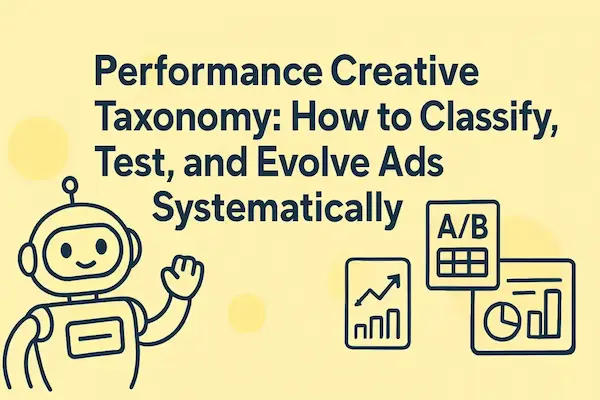
This article outlines a Performance Creative Taxonomy framework to deconstruct ads into core components like hooks, angles, and visuals, enabling structured AI-powered testing for predictable growth.
Conclusion
Copy link


Building a Performance Creative Taxonomy to Systematically Classify, Test & Evolve Ads
Quick Takeaways
Manual creative testing is broken; it’s too slow and based on guesswork, which wastes ad spend and burns out teams.
A systematic approach is essential; a "taxonomy" that classifies ads by hook, angle, and visual style is what separates high-growth teams from the rest.
AI agents provide the solution; they automate the entire experimentation loop, allowing lean teams to test at scale and find winning ads faster.
TL;DR
A performance creative taxonomy is a systematic engine for classifying ad components (hooks, angles, visuals), testing them with AI agents, and scaling winners to deliver predictable growth by replacing guesswork with data.
Introduction
If you manage paid advertising, you know the feeling: launching another set of ads based on a hunch, hoping something sticks. It’s a chaotic cycle of guesswork, creative fatigue, and unpredictable results that leaves even the best teams feeling stuck. This constant pressure to produce fresh creative without a clear system is a direct path to burnout and wasted budgets.
This is where a "Performance Creative Taxonomy" comes in. This isn't an academic exercise; it's a practical framework for thinking about, classifying, and testing ads in a structured way. It’s a system for deconstructing any ad into its core components—the hook, the messaging angle, the visual style, the offer, and the call-to-action—so you can test variables methodically instead of throwing ideas at the wall.
This post will lay out a framework for building that engine. We'll explore why the old way of managing ad creative is failing and how a systematic, AI-powered approach can turn your ad account into a predictable source of growth.
The Problem: Why Ad Creative Feels Like Guesswork
Most teams struggle to test enough creative rigorously enough to drive real improvement. Without a system, this process quickly devolves into guesswork, leading to stagnant performance and frustration.
What Is a Performance Creative Taxonomy (and Why Do You Need One)?
A performance creative taxonomy solves the core problem of disorganized testing. It’s a system for deconstructing ads into their fundamental components—like hooks, angles, and visual concepts—to understand why they succeed or fail. It turns chaos into a clear, repeatable process for learning.
It affects: Lean Marketing Teams and Founders
This problem is most acute for lean marketing teams, agencies, solo founders, and media buyers who lack the resources for massive-scale manual testing. They face burnout from the repetitive, low-joy work of manually creating variants, launching campaigns, and analyzing spreadsheets, all while under pressure to deliver results.
It happens when: You Don't Have a System for Testing
The problem arises from the absence of a structured process. Most teams simply don’t have the time or resources to test at the scale needed to find what truly works. This forces them to rely on assumptions and guesswork, launching a handful of creatives and hoping for the best rather than running controlled experiments.
It matters because: Good Ideas Die and Budgets Get Wasted
Without a system, good ideas die before they can be validated, performance stagnates, and ad spend is wasted on underperforming creatives. Even worse, you never learn why something worked or failed, leaving you to guess again on the next campaign.
The difference is like cooking with a detailed recipe versus throwing random ingredients in a pan and hoping for the best. A systematic approach gives you a repeatable process for success, while guesswork leads to inconsistent and often disappointing outcomes.
Why the Old Way of Testing Is Getting Worse
The digital advertising landscape is moving faster than ever. Platforms like Meta thrive on data and expect a higher volume of creative variations and faster refresh cycles than most teams can manage manually. This pressure leads directly to creative fatigue and ad performance fatigue, where returns diminish because you can't produce fresh, high-performing ideas fast enough. The cost of being slow, disorganized, and reliant on guesswork is rising, as competitors who test systematically find winning ads faster and capture market share.
The Solution: Building Your Creative Experimentation Engine
The solution is to stop guessing and start building a systematic engine that powers your creative testing and optimization.
How Leading Teams Handle Creative Testing
Smart teams address this challenge by adopting better processes, tools, and a more coordinated approach to collaboration.
They Establish a Systematic Process: High-performing teams replace guesswork with a structured experimentation process. They use AI to scrape competitor ads and deconstruct them into their core components (the taxonomy). From there, they perform "Strategic Opportunity Mapping" to analyze messaging angles, visual styles, and offers, identifying gaps and dominant formats. This creates a clear, ranked list of hypotheses to test for maximum impact.
They Use Tools to Automate the Grunt Work: Leading teams leverage AI to automate the high-volume, repetitive tasks that cause bottlenecks. This replaces fragmented manual workflows with a system that enables compound learning, where each test makes the next one smarter. AI agents can handle the creation of ad variants, launching campaigns, monitoring performance, and analyzing results, freeing up human teams to focus on strategy.
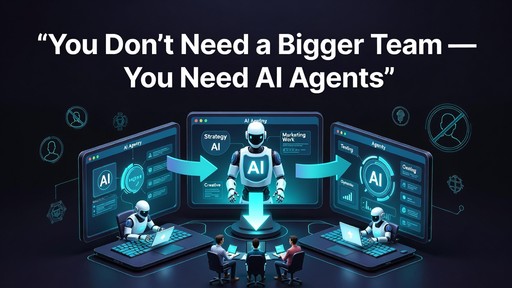
They Create a Coordinated "Team": Successful experimentation isn't siloed; it's a coordinated effort. Instead of siloed roles, leading teams deploy a full-stack AI team where specialized agents collaborate seamlessly. This team includes Bran (Brand Strategist) to scan the market, Desi (Designer) to create visuals, Addie (Performance Marketer) to launch experiments, Anna (Growth Analyst) to interpret performance, and Olly (Ops Manager) to orchestrate the entire workflow.
How Scalable Helps You Build This System
Scalable provides an agentic, automated performance advertising platform that acts as a full-loop experimentation operating system. It’s designed to build this systematic engine for you.
Scalable’s five AI agents automate the entire process, from competitor research and Strategic Opportunity Mapping to generating and launching hundreds of ad variants. The system automatically identifies winning ads, pauses the losers, and reallocates your budget to what’s working in real-time, creating compound learning with every test.
This entire powerful system is steered through "Vibe Marketing." You simply write a "Vibe Brief" in plain English—describing your brand's feel, goals, and desired outcomes—and Scalable’s AI team handles the high-volume execution, turning your vision into a data-driven growth machine.
Final Thoughts
The key to unlocking sustainable growth is to stop treating ad creative like a guessing game and start building a systematic engine for experimentation. Moving from manual, chaotic workflows to a structured, automated process is what separates stagnant brands from those that scale predictably.
This approach doesn't replace human creativity; it amplifies it by removing the tedious parts. By letting AI handle the repetitive production and analysis, your team is free to focus on what matters most: high-level strategy, brand direction, and uncovering the deep insights that drive real business results.
Frequently Asked Questions
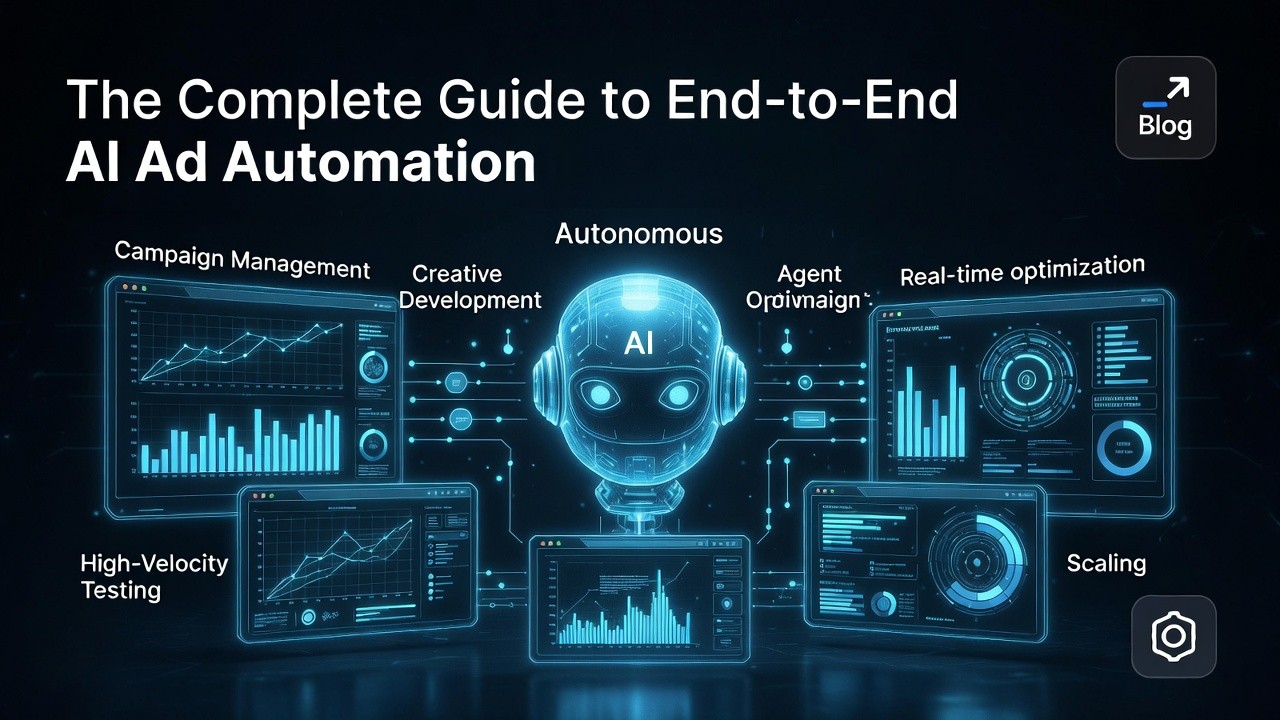
What does “end-to-end” AI ad optimization actually mean? It means using AI to automate the entire ad lifecycle, from research and creative generation to testing, publishing, real-time optimization, and scaling winners across multiple channels. It’s a single, cohesive loop managed by a coordinated set of AI agents.
How is this different from using a platform's built-in automation tools like Meta's? Built-in tools optimize within a single platform's silo. A system like Scalable is channel-agnostic, running structured experiments and learning across all your campaigns and platforms to provide a holistic view of what's driving business results.
Does this kind of system replace my media buyer or marketing team? No, it acts as a force multiplier. It automates the repetitive, high-volume execution work, which frees up your team to focus on higher-level strategy, brand direction, and interpreting nuanced insights.

We help to grow fast, so get started
shaan@kouo.io