


Introduction
Managing paid ad campaigns often involves brainstorming creatives, launching them, and spending hours monitoring dashboards to determine what works, while battling creative fatigue, wasted spend, and slow testing cycles that kill good ideas before validation.
In today's digital landscape, platforms like Meta and TikTok demand constant fresh creatives, more variants, and faster cycles than teams can handle manually, creating a gap where ideas get buried and the cost of slowness is high.
The Ad Learning Loop provides a systematic, AI-driven approach that turns ad accounts into continuous experimentation engines, enabling lean teams to test hundreds of variants, scale winners, and achieve data-driven growth previously reserved for large departments.
Conclusion
Copy link


The Ad Learning Loop Explained: From Inputs to Feedback to Results
Quick Takeaways
The Ad Learning Loop is a powerful system that transforms how marketing teams approach growth. Instead of relying on manual campaign sprints and guesswork, it creates a continuous, automated cycle of testing, learning, and scaling. By handing the repetitive work to AI agents, teams can move faster, get more reliable insights, and focus their energy on high-level strategy.
What it is: The Ad Learning Loop is an end-to-end ad optimization process that uses AI to automate experiments, identify winning ads, and shift budget to what works.
Why it matters: It replaces slow, manual ad management with a system that provides faster insights, more reliable test results, and a predictable way to scale winners.
How it works: It’s a continuous cycle of gathering performance data, generating hypotheses, testing creative variations, and automatically scaling what performs best, turning marketing into a structured science.
The outcome: This process removes guesswork and busywork, allowing lean teams to run more tests, find what messages resonate, and achieve compound growth over time.
TL;DR: One-Sentence Summary
The Ad Learning Loop is a continuous, automated system where AI agents research, create, test, and optimize ads in real-time to find what works and scale it faster.
Introduction
If you’ve ever managed paid ad campaigns, you know the drill. You brainstorm a few creative angles, launch them, and then spend hours babysitting dashboards, trying to figure out what’s actually working. You’re constantly fighting creative fatigue, wasted ad spend on underperforming variants, and testing cycles that are so slow that good ideas die before you can even prove their value.
This chaos forces you to guess. The Ad Learning Loop is the antidote.
It’s a systematic approach that turns your ad account into a non-stop experimentation engine. By democratizing the test-and-learn mentality, it gives even the leanest teams the power to achieve results that were once only possible for massive, specialized departments. It’s a shift from one-off creative pushes to a data-driven process that finds what works, doubles down on it, and uses those insights to make the next round of ads even smarter.
Why This Matters Right Now
In today's digital landscape, the cost of being slow is incredibly high. Modern ad platforms like Meta and TikTok thrive on data and expect a constant stream of fresh creative. They demand more ad variants, more targeting permutations, and faster refresh cycles than most teams can possibly handle manually.
This creates a huge gap where good ideas get buried before they have a chance to be validated. The Ad Learning Loop matters because it compresses that learning cycle from weeks or months down to days. It gives lean teams the ability to run hundreds of ad variants in a matter of weeks—one brand tested over 400 variants in 30 days—to validate what works and scale winning ideas before they get lost in the shuffle.
How the Ad Learning Loop Works
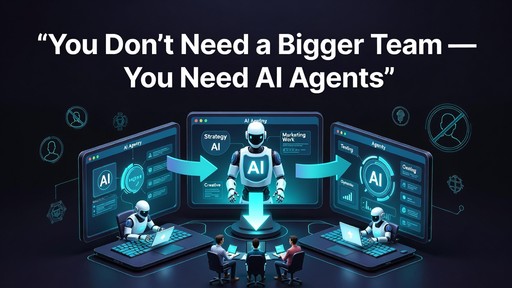
The loop is a systematic, five-step process that runs continuously in the background, where five AI agents collaborate like a real team to turn your strategic goals into measurable results.
Step 1: Research and Hypothesize (The Input). First, Bran (The Strategist) scans the market, monitors thousands of competitor ads, and turns those insights into clear hypotheses for what to test next.
Step 2: Generate Ad Variations. Based on those hypotheses, Desi (The Designer) crafts hundreds of on-brand ad variations—including copy, headlines, visuals, and even UGC-style videos—that bring your message to life.
Step 3: Launch Structured Tests (The Feedback Cycle). Next, Addie (The Buyer) launches these variations as structured experiments across your channels, setting up tests across variables like audience, copy, and placement to ensure you're not just guessing what worked.
Step 4: Measure and Optimize in Real-Time. As the tests run, Anna (The Analyst) analyzes campaign performance metrics continuously. She identifies winning ads and pauses the losers early, so your budget is always focused on what’s actually driving results.
Step 5: Scale Winners and Repeat (The Outcome). Finally, the system automatically reallocates spend toward the winning variants to scale them. The learnings are fed back into the beginning of the loop for the entire team, with Olly (The Engagement Manager) orchestrating the process and ensuring campaigns keep moving 24/7, making the next round of experiments even smarter.
The Bigger Picture
The Ad Learning Loop isn't just a new tactic; it represents a fundamental shift in how we approach growth marketing. It's about moving away from the old model of isolated, one-off campaigns and toward a continuous "ad experimentation flywheel" that builds momentum over time. The more it runs, the smarter it gets. This transforms your ad platform into the Cursor of ads: a tool you absolutely love AND need—the opposite of Meta, a tool you absolutely need but hate.
The goal here isn't to replace talented marketers. Instead, this system acts as a force multiplier for your team. It automates the repetitive, low-joy work—the manual A/B test deployments, the spreadsheet wrangling, the constant monitoring—that bogs people down. This frees up your team to focus on what humans do best: high-level strategy, interpreting nuanced insights, and setting the creative direction for the brand.
Final Thoughts
The old model of manual sprints and static rules simply can’t keep up. The Ad Learning Loop removes the guesswork from paid advertising and provides the inevitable future for teams who want to win. By turning marketing into a structured science, it delivers a continuous engine of verifiable wins that compound into predictable, measurable growth.
Frequently Asked Questions
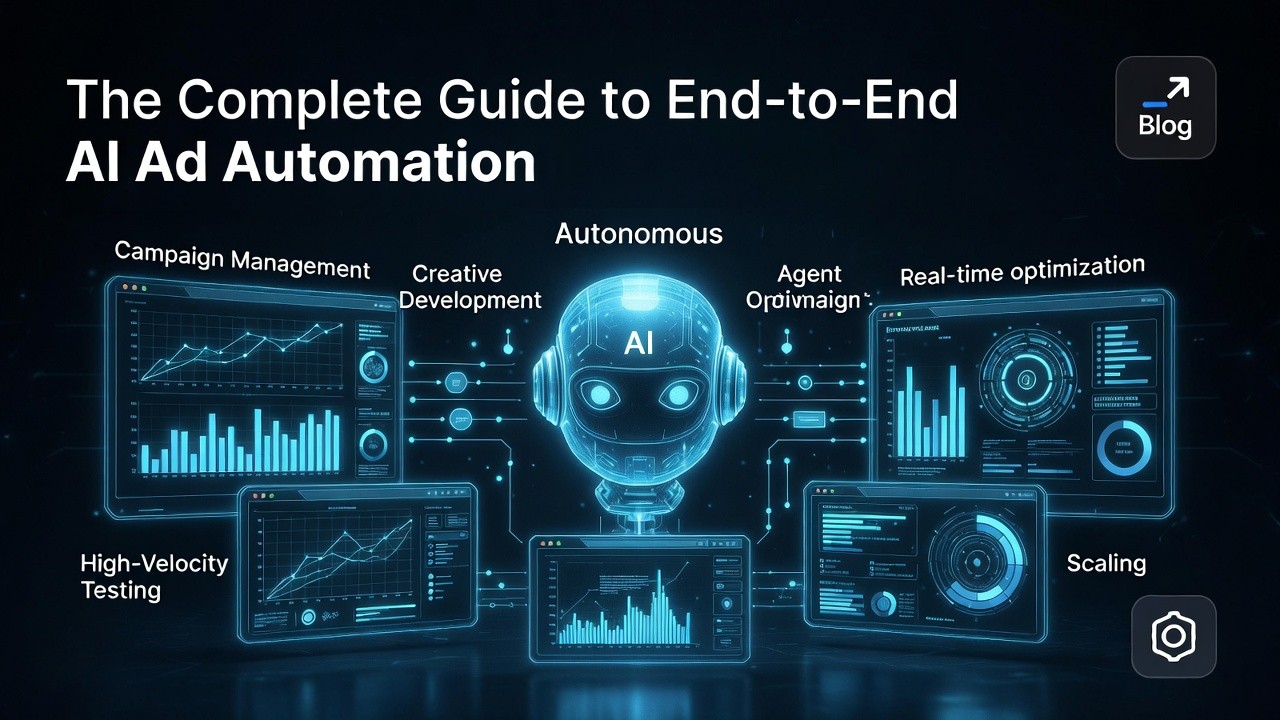
What does “end-to-end” ad optimization actually mean? It means using AI to automate the entire ad lifecycle, from the initial research and creative generation to testing, publishing, real-time optimization, and scaling across multiple channels. Instead of using separate tools for each step, a single system manages the whole process.
Is this just another AI tool for writing ad copy? No, writing ads is just a small piece of it. The core value is the automated experiment loop: generating a hypothesis, creating variations, launching tests, measuring the results, and automatically scaling the winners.
Will this system replace my media buyer? No, it acts as a force multiplier for your team. It automates the repetitive execution and testing work, which frees up your media buyer to focus on higher-level direction, brand strategy, and interpreting nuanced insights

We help to grow fast, so get started
shaan@kouo.io