

Introduction
Modern marketing teams face constant pressure to test 30-100 ad variants per campaign manually, resulting in slow processes, creative fatigue, and missed opportunities for good ideas.
Traditional manual campaign sprints with siloed teams and slow feedback loops are too expensive and sluggish to maintain brand consistency in today's fast-paced market, leading to wasted budgets and the inability to hire full expert crews.
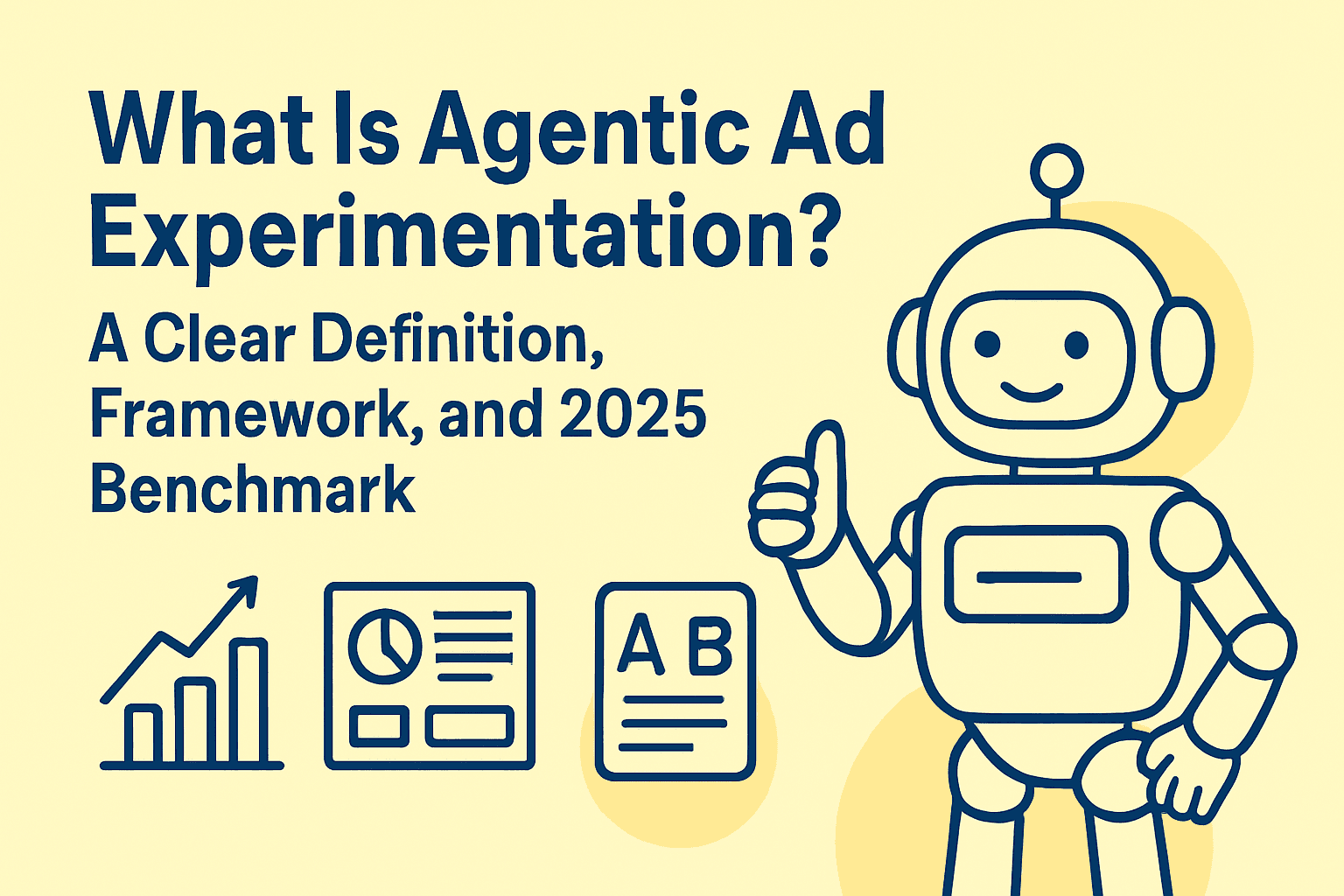
This article defines agentic ad experimentation as a framework using a team of specialized AI agents to automate the full ad testing process from research to reporting, enabling lean teams to run hundreds of variants and scale winners efficiently.
Conclusion
Copy link


Agentic Ad Experimentation Explained: Definition, Framework & 2025 Benchmark
Quick Takeaways
Agentic ad experimentation uses a team of specialized AI agents to automate the entire ad testing process.
It replaces slow, manual campaign sprints with an always-on, continuous learning loop.
This approach allows lean teams to run hundreds of ad variants and find winning ideas in days, not weeks.
It's designed to help you test faster, spend smarter, and scale growth without adding headcount.
TL;DR:
Agentic ad experimentation replaces manual campaign work with a team of always-on AI agents that test creatives, shift budget in real time, and scale winning ads across channels for you.
Introduction
If you're on a modern marketing team, you know the struggle. There's constant pressure to do more with less, and platforms expect you to test 30–100 ad variants per campaign just to keep up. The pace of manual ad testing is slow and clunky, and way too many good ideas die in a spreadsheet before they ever get a fair shot. It’s a cycle of creative fatigue and missed opportunities.
That's where "agentic ad experimentation" comes in. We call the philosophy behind it “vibe marketing”—a human-first, experiment-driven approach powered by intelligent AI agents. It’s a system that translates your brand’s plain-English intent—its “vibe”—into structured, high-volume experiments that learn and improve continuously.
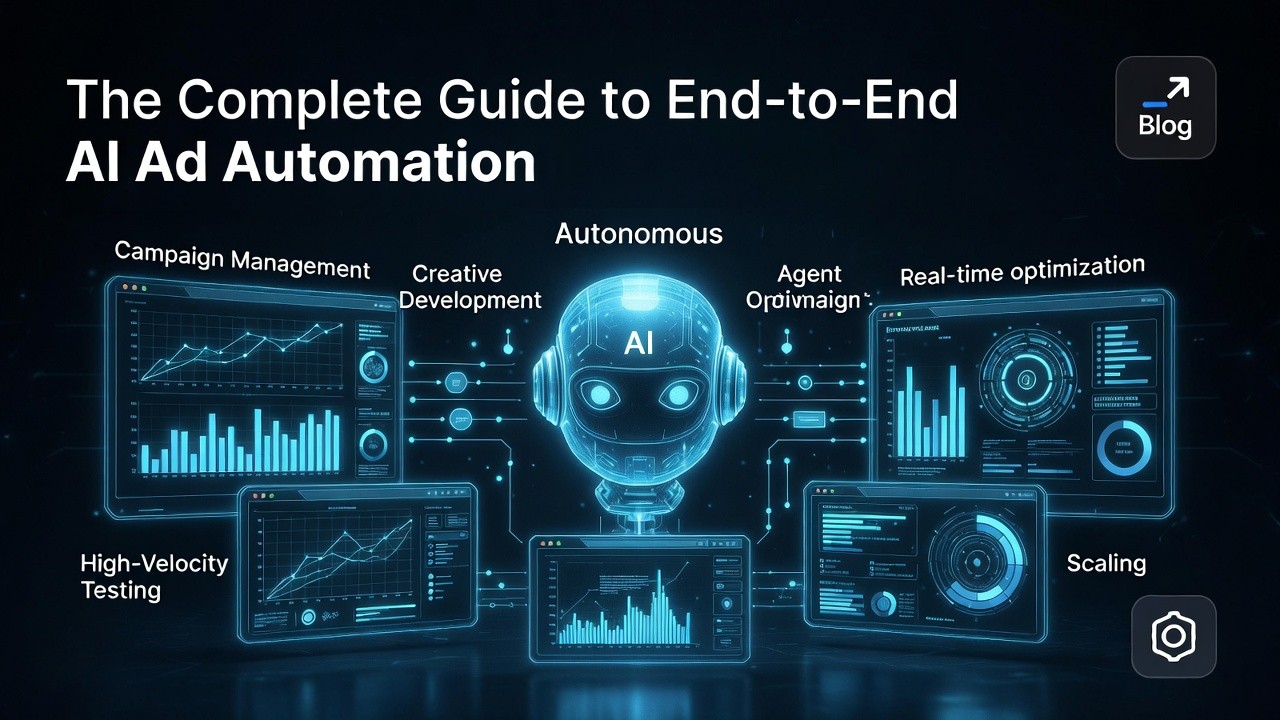
This isn't just another creative generation tool or a bidding algorithm. It's a full-loop system that acts as a force multiplier for your team, handling everything from Research -> Create -> Launch -> Optimize -> Reporting. This is the new benchmark for how high-performing teams will operate in 2025.
Why This Matters Right Now
For years, the standard model of media buying has been based on manual campaign sprints. You plan, you launch, you check back in a week, you optimize, you report. The problem is, this entire process—with its siloed teams and slow feedback loops—is too expensive and sluggish to keep your brand's "vibe" consistent and responsive in today's market.
The cost of being slow is incredibly high. It leads to creative fatigue, wasted budget, and missed opportunities to double down on a winner—a cost that can be cut significantly, as seen with teams who've used this system to decrease CPA by nearly 50% in their first month.
For most lean teams, hiring a full-stack crew of experts—a strategist, a designer, a media buyer, and an analyst—just isn't feasible. The overhead is massive, and even then, you're still limited by human-paced workflows and the inevitable context lost between meetings and handoffs.
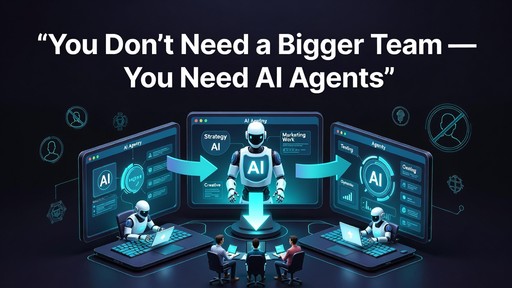
Agentic systems solve this problem by encoding that deep expertise into an automated, coordinated workflow. A single person can now have the capability of an entire team, running hundreds of tests and finding winning ads with a speed and efficiency that was previously impossible.
The Framework: How a Team of AI Agents Works
The core of this approach is a team of five specialized AI agents that collaborate to manage the end-to-end workflow. Each has a distinct role, just like a human marketing team.
Bran, The Strategist: Think of Bran as your compass. He scans the market, analyzes thousands of competitor ads, scrapes Amazon reviews, and even analyzes Reddit threads to identify trends. He then turns those insights into clear, testable hypotheses for your campaigns.
Desi, The Designer: Desi is your visualizer. Working from a "strategic opportunity map" created by Bran, she crafts hundreds of on-brand creative variations to fill the gaps your brand hasn’t explored. This includes everything from ad copy and static images to realistic, UGC-style video ads.
Addie, The Buyer: Addie is the scientist in the lab. She takes the creative variants and launches them as structured experiments across your ad channels. She manages audience splits and ensures the budget is optimized for learning, not just spending, so you get clear results.
Anna, The Analyst: Anna is the sense-maker. As tests run, she analyzes performance data in real time to identify which ad combinations are winners. Her insights create a "compounding effect," where each experiment teaches the next and improves the whole system over time.
Olly, The Ops Manager: Olly orchestrates the entire process. He collates tasks for your approval, reports back on results, and keeps the campaigns moving forward 24/7. He's the glue that ensures the whole system runs smoothly while you stay in control of the strategy.
The Bigger Picture
It’s Not About Replacing You; It’s About Freeing You
Let’s address the elephant in the room: "Will AI replace my media buyer?" The short answer is no. This technology is a "force multiplier," not a replacement for human marketers.
Agentic systems are designed to handle the repetitive, low-joy parts of the job—the manual A/B test deployments, the spreadsheet wrangling, and the tedious reporting that consumes so much of a marketer's day. It's about automating the grunt work so you don't have to.
This frees up human teams to focus on what they do best: high-level strategy, creative direction, and understanding the deep, human nuances of the brand's story. Think of it as the "Cursor of ads"—a tool you absolutely love AND need (the opposite of Meta, a tool you absolutely need but hate). It's a precise and powerful tool that amplifies your expert judgment and allows you to execute your vision at a scale you never could before.
Final Thoughts
At its core, agentic ad experimentation is a shift in mindset. It’s about moving away from treating ad campaigns as discrete, project-based sprints and toward managing them as an always-on learning system—a continuous engine of small, verifiable wins that compound over time.
The goal is to get the ad experimentation flywheel spinning faster than your competitors. When you can test more ideas, learn from the results in hours instead of weeks, and scale the winners with confidence, you build a sustainable growth advantage.
This approach helps you scale smarter, not just harder, by ensuring every dollar of your ad spend is working to teach you something valuable about your customers and your market.
Frequently Asked Questions
What are AI agents in this context? They are specialized AI models assigned to specific marketing roles, like a strategist, designer, or analyst. These agents work together as a coordinated team to manage the entire ad experimentation process from end to end.
How is this different from the built-in automation on platforms like Meta? Built-in tools optimize within a single platform's silo. Agentic systems are channel-agnostic, running structured experiments that learn across all your campaigns and platforms to provide a holistic view of what's working.
Does this replace my media buyer? No, it acts as a force multiplier. It automates the repetitive execution work, which allows your media buyer to focus on higher-level strategy, brand direction, and interpreting nuanced insights.
We help to grow fast, so get started
shaan@kouo.io